
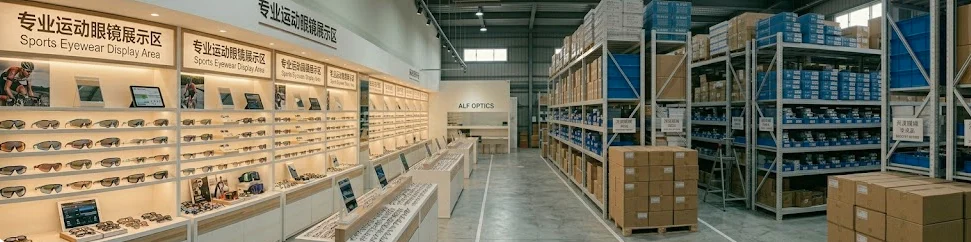
Sports Eyewear Wholesale
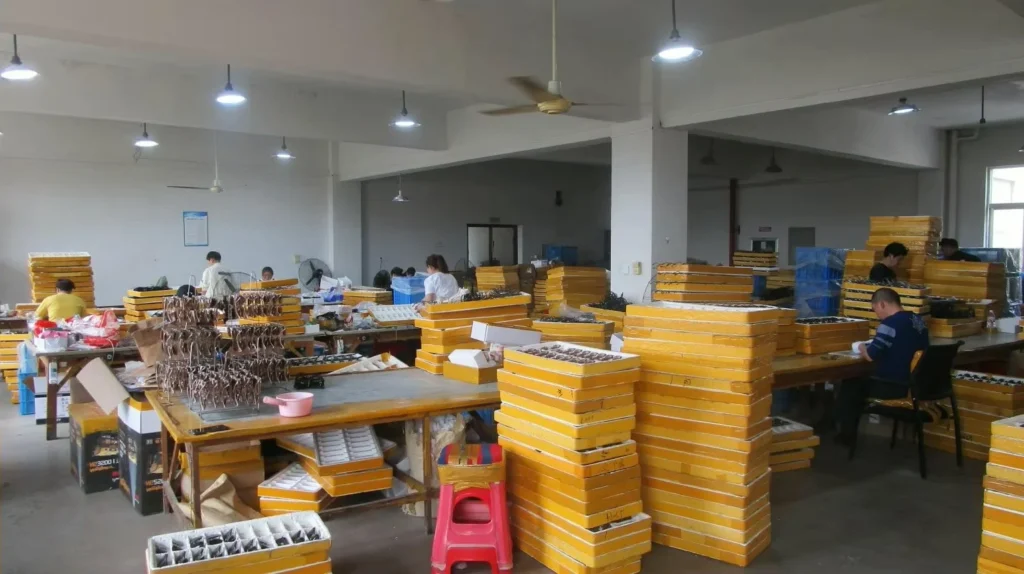
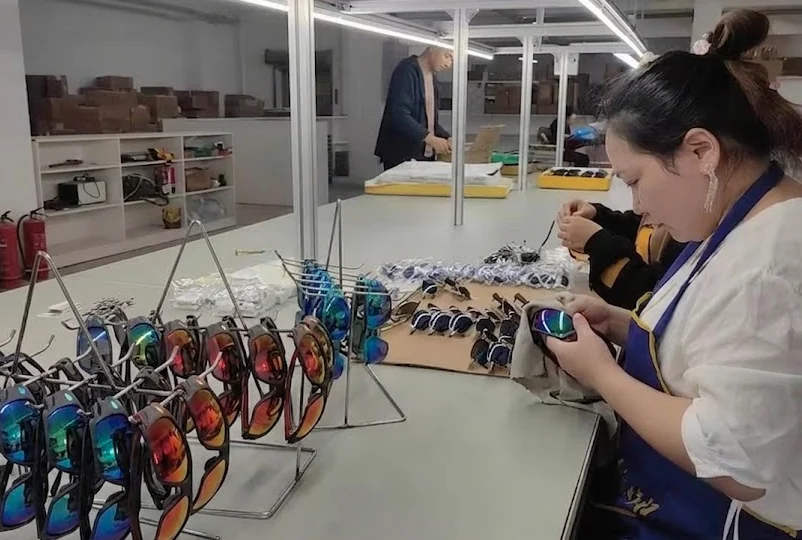
Sports eyewear is one of the most technical products we manufacture. Many customers think sports glasses are just “bigger sunglasses,” but from the factory point of view, they involve curved lenses, stronger frames, trimming work, anti-impact tests, and many small adjustments that workers handle every day. Below is the real situation in our Wenzhou production workshop.
Get Price List & Samples →
Why Sports Eyewear Requires More Skill
Compared to regular sunglasses, sports eyewear has higher requirements in flexibility, angle matching, lens curvature, and sweat-resistance design. Even small misalignment becomes obvious because sports frames sit closer to the face. This is why not every eyewear factory in Wenzhou makes sports glasses— but our workers have been doing this long enough to be comfortable with them.
If you want to see all our product categories, here is the link: → All Products
Types of Sports Eyewear We Produce
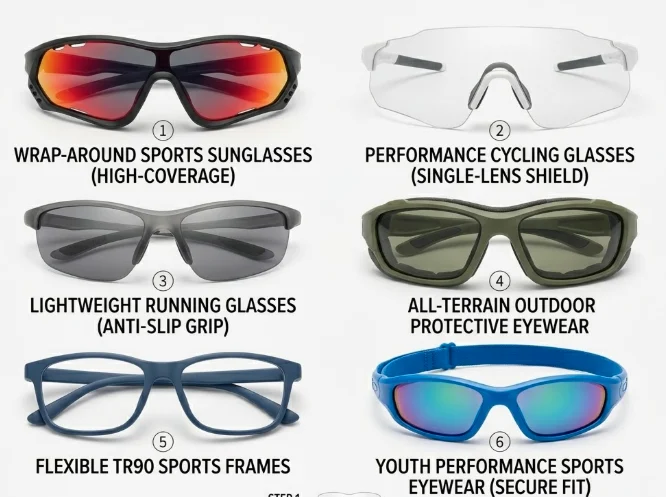
We manufacture several types of sports eyewear:
- wrap-around sports sunglasses
- cycling glasses
- running glasses
- outdoor protective sports eyewear
- multi-lens interchangeable models
- TR90 flexible sports frames
- youth sports eyewear
Sports eyewear usually has more details than normal sunglasses, so when customers ask why sports glasses cost more, the simplest answer is: “More work, more steps, more tests.”
Curved Lenses — The Hardest Part
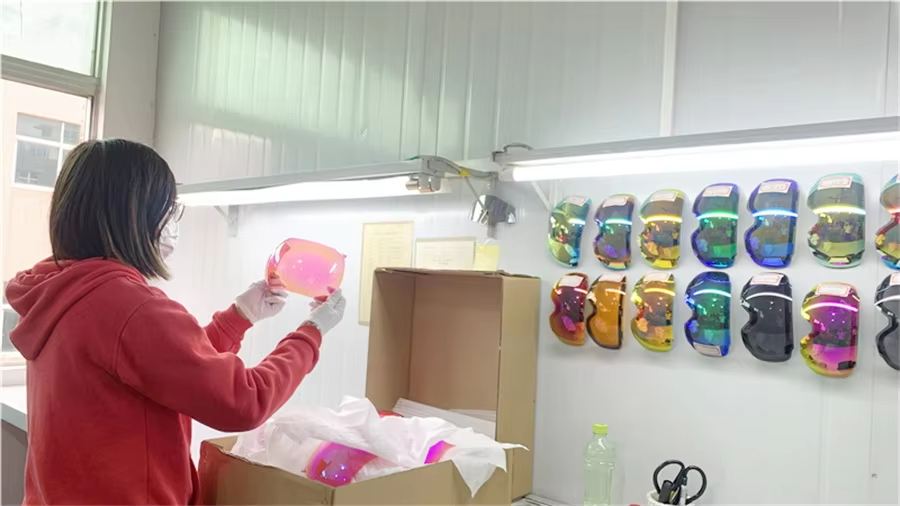
Curved lenses (usually 6-base or 8-base) need precise fitting with the frame curve. If the lens is too tight, it cracks. If it is too loose, light leaks in from the sides. Workers adjust lens pressure manually, using experience rather than pure machines.
Sometimes weather affects the tension of frames. On humid days, frames become slightly softer. Workers joke that they are “weather technicians,” because they adjust based on small temperature changes.
Trimming the Lens Edges
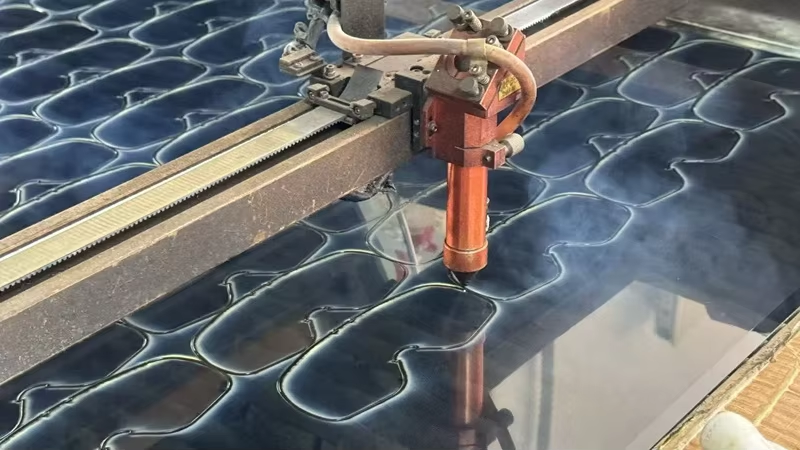
Sports eyewear usually needs trimming on the lens edges, because curved lenses don’t always match the frame exactly. Workers use trimming tools and small grinders to adjust the shape little by little. This is delicate work— one wrong move and the lens becomes unbalanced.
Our trimming team does this every day, so they know which models are “easy” and which ones require “patience and strong coffee.”
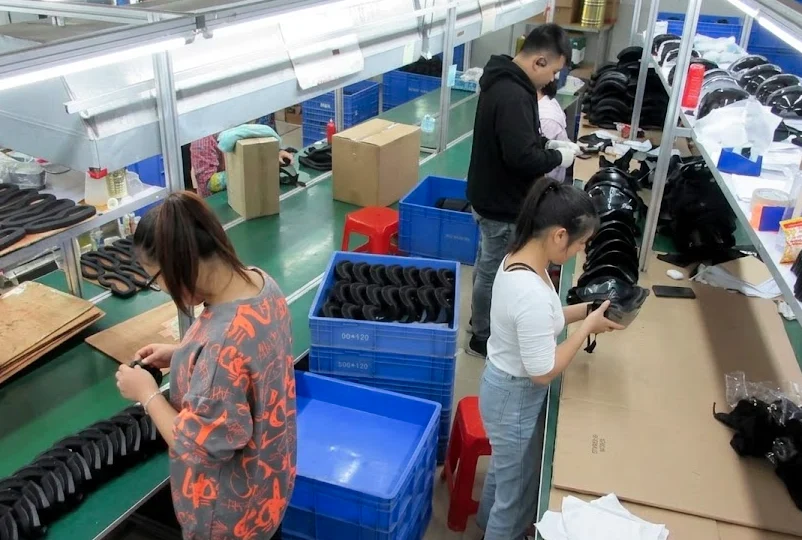
Frame Flexibility & Impact Tests
Sports eyewear frames must be flexible and strong. We use materials like:
- TR90
- PC
- TPR rubber for nose pieces
Every batch goes through:
- bending tests
- impact tests
- temple opening & closing test
Our QC always complains that sports eyewear takes more time, but they also admit “After so many tests, quality becomes reliable.”
Anti-Fog and Sweat-Resistance Details
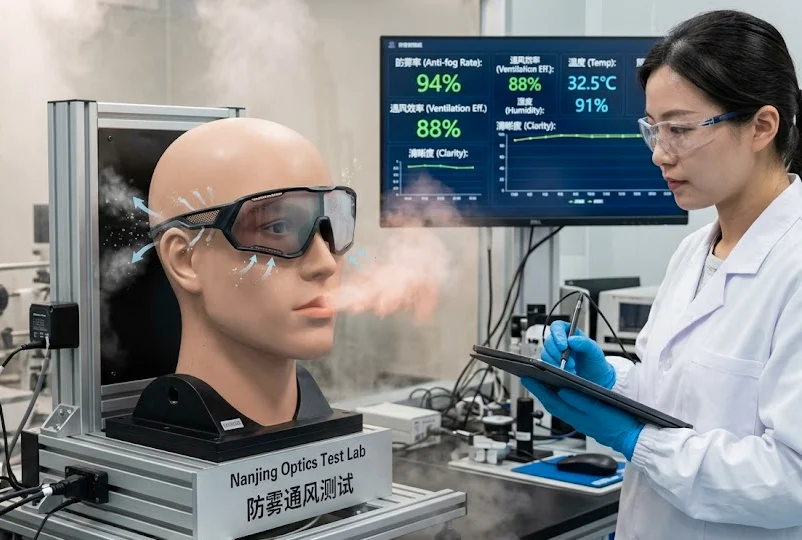
Sports eyewear often includes small anti-sweat grooves or ventilation holes to reduce fog. These details are small but require accurate tooling. Sometimes a groove depth of only 0.1mm changes the airflow. Customers rarely see these details, but workers adjust them often during mold testing.
QC for Sports Glasses
QC for sports eyewear includes:
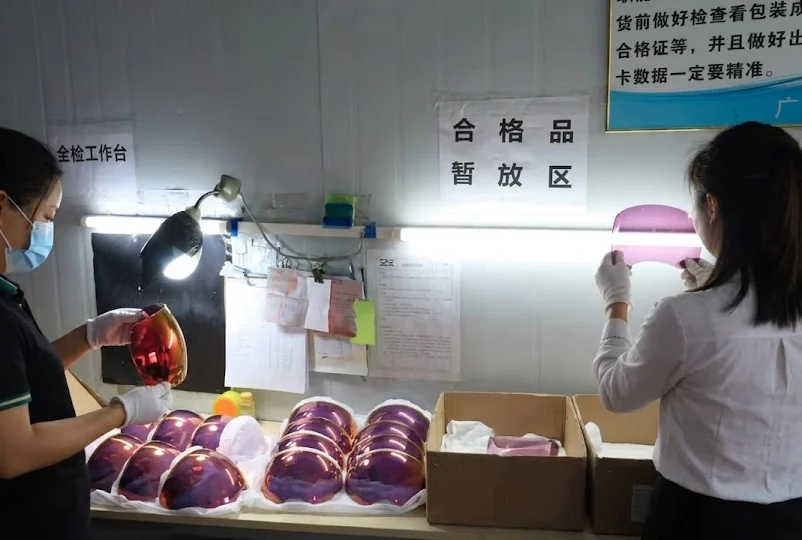
- lens curvature check
- lens surface check
- frame flexibility test
- impact resistance
- tightness of assembly
- nose pad stability
Because sports eyewear has more parts, QC usually needs more time. If anything feels off, QC stops the line immediately— this happens often with curved lens models.
If you want to read our full QC workflow, here is the page: → QC Process
Packing Method
Sports eyewear may include:
- extra lenses
- hard case or soft pouch
- cleaning cloth
- branding stickers
Orders with multiple lenses require more careful sorting. QC checks the lens set twice —first at assembly, and again during packing. Mistakes can happen if lens colors look similar, so we separate everything clearly.
MOQ & Sample Time
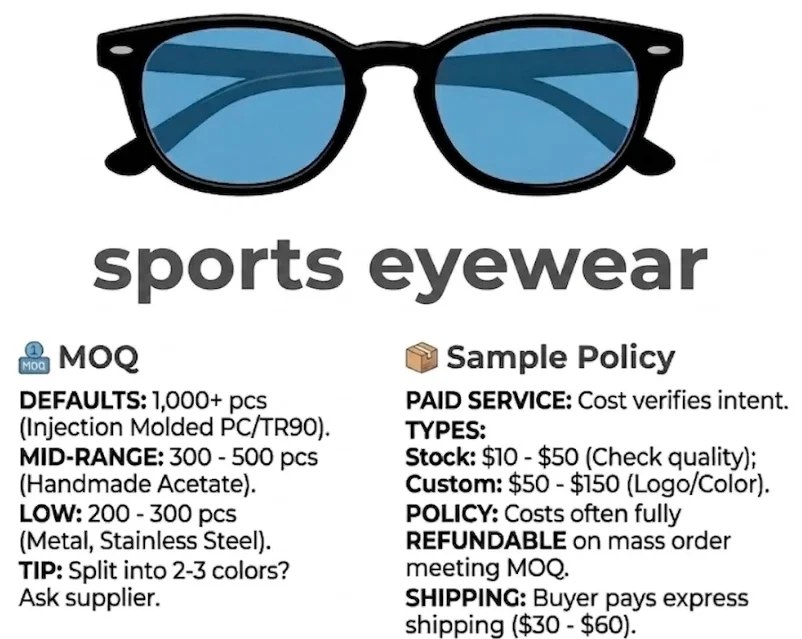
Our MOQ for sports eyewear is:
- regular models: 600–1200 pcs per model
- curved / multi-lens models: 1200–2400 pcs
Sample time is 7–14 days depending on lens types.
Start Your Sports Eyewear Project
If you want samples or want us to produce your design, you can contact us anytime: