

Inside Our Eyewear Factory
This is how our mid-sized factory in Wenzhou works every day—machines running, workers chatting, QC checking, cartons piling up, and orders moving from one table to the next. We produce reading glasses, sunglasses, sports eyewear, safety glasses, photochromic styles, and many seasonal models. This page shows the real situation inside.
Get Price List & Samples →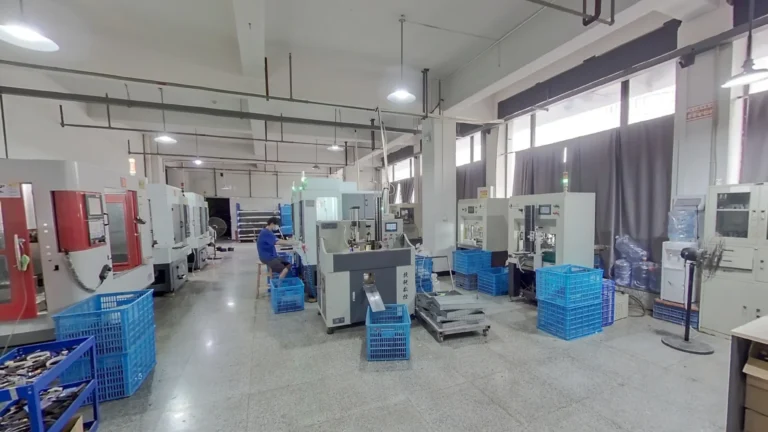
Factory Layout
Our building is not fancy, but it is practical. If you walk in from the front gate, the first floor is for injection and material storage. The second floor is polishing and lens cutting. The third floor is assembly and QC. The top floor is for packing, cartons, and finished goods.
We also have a small area behind the building where workers test photochromic lenses under sunlight. On cloudy days, this area becomes a “weather discussion zone” where people look at the sky and complain that the sun is too shy.
If you want a simpler explanation of how products move through our lines, we made a dedicated page here: → QC & Production Flow
Injection & Frame Production
Injection machines run almost every day except holidays. Most of our reading glasses and safety frames come from injection, while some sports models and higher-end sunglasses use different methods.
A normal morning sounds like this:
- machines running with steady noise
- raw material bags being opened
- a worker shouting “temperature high, adjust it!”
- someone rushing with a half-finished frame saying “is this the right color?”
Some colors are very sensitive. A small temperature change can shift them slightly. If the shade is wrong, workers gather and argue a bit, then someone calls the material supplier to double-check.
Polishing & Lens Cutting
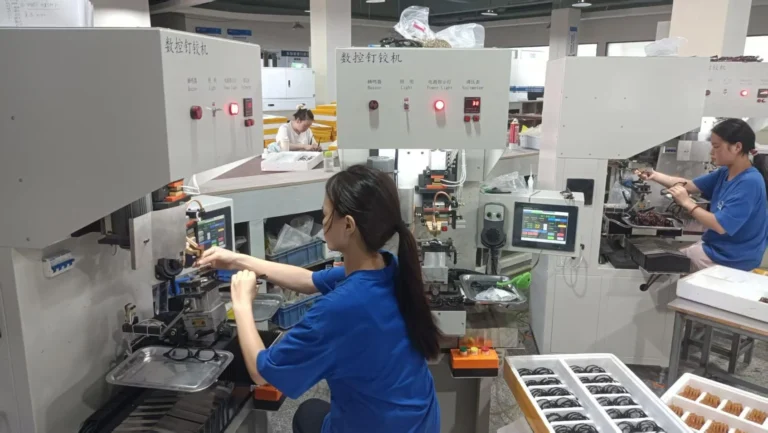
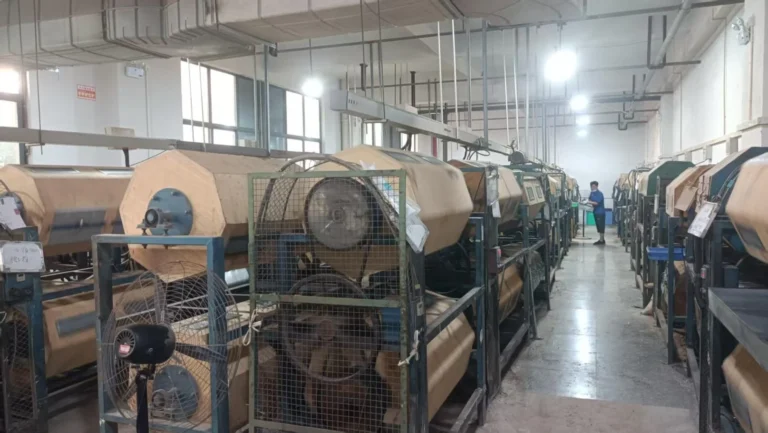
This floor is louder than the others. Polishing machines make a repeating rhythm— some workers say it sounds like “old music” because they’ve heard it for years.
Polishing is more skill than machine. Some workers can polish frames beautifully; others struggle and need more time. Experience really matters here.
Nearby is the lens cutting area. A worker sits with a bright lamp checking lenses one by one. Sometimes they complain that certain suppliers give too many small scratches. When that happens, we switch suppliers immediately.
Polishing Line
Manual + machine polishing. Smoothness decides 50% of the final look.
Lens Cutting
Reading lenses, sunglass lenses, and special lenses for sports models.
Assembly Line
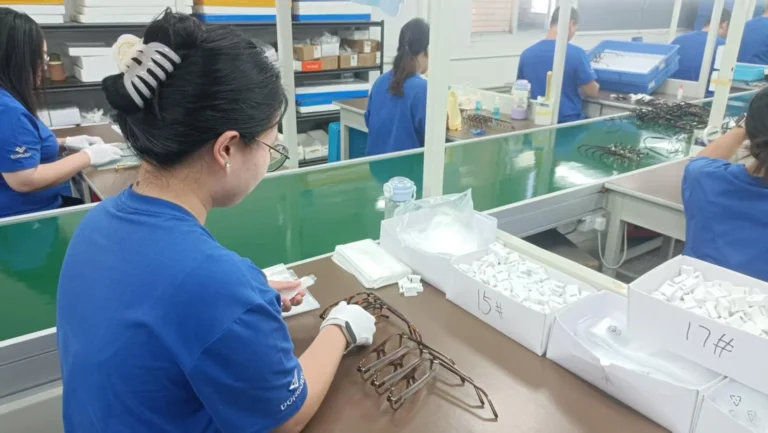
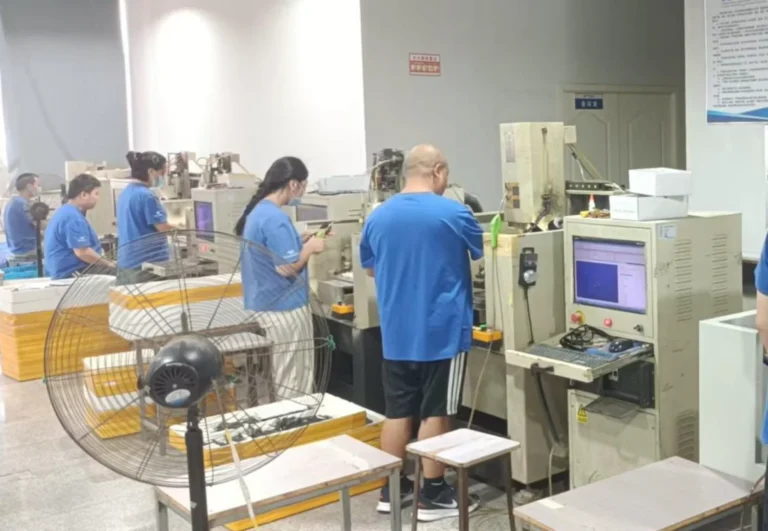
The assembly floor is quieter than polishing but busier in a different way. Workers sit in rows, fitting hinges, adding screws, pressing lenses, wiping frames, and checking small details.
Some models cause trouble— sports frames with many curves, or sunglasses with a tight fit. Then workers help each other, and sometimes a line leader walks up and says, “Don’t force it, adjust the screw first.”
If you want to see all the categories we assemble here, you can check our product range: → Eyewear Product Categories
QC Area
Our QC section is always bright. Workers sit with white lamps, checking frames one by one. If a problem appears, they call the assembly worker and discuss what happened.
QC here is not complicated, but it is strict:
- lens power test for reading glasses
- UV level for sunglasses
- tension & flexibility for sports models
- impact check for safety frames
- photochromic sunlight check
You can read everything in detail here: → QC Process Explained
Packing & Storage
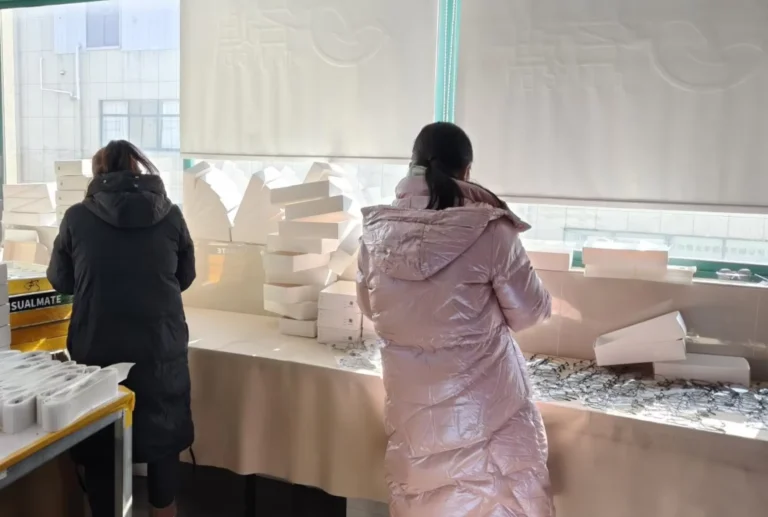
Packing looks simple but is usually the most chaotic part. Cartons stack everywhere— not because we don’t want to organize, but because big orders move fast and workers just try to keep up.
Every few days, someone says: “We really should clean the warehouse,” and everyone agrees. But once a new order arrives, the cleaning plan disappears again.
For shipping information, you can check here: → Shipping & Logistics
Why This Factory Works
A mid-sized factory depends on people more than machines. Workers know their tasks, line leaders solve problems quickly, QC keeps things in control, and production managers try to keep balance between speed and quality.
Things go wrong sometimes— a mold breaks, a lens batch fails QC, a supplier delays screws— but the team adjusts quickly. This is normal in a real factory.
If you want to talk with us directly, here is the simplest link: