
OEM · Private Label · Wholesale · Custom Development
Optical Frames
Manufacturer
Custom optical frames manufacturing for global eyewear brands, wholesalers, and private label buyers.
OEM & private label eyeglasses production with acetate, metal, titanium, and TR90 frame solutions. Low MOQ. Factory direct pricing. Proper quality control — not just a checkbox at the end of the line.
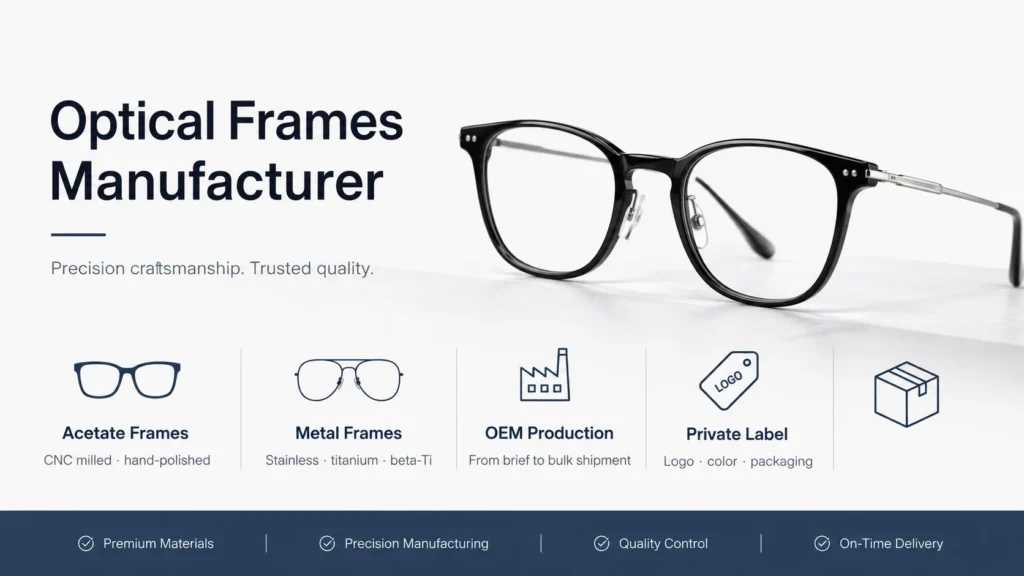
Optical Frame Manufacturing Solutions
Seven product lines, one factory. Most of our customers start with one or two categories — acetate RX frames and a metal slim line, for example — then expand once they've seen how production actually works here. We're fine with either approach.

Acetate Optical Frames
Sheet acetate sourced from Mazzucchelli and Okia. CNC milled in-house, hand-tumbled, hand-polished. Custom laminate patterns available — you’re not limited to solid colors out of a catalog.
Acetate Frames →
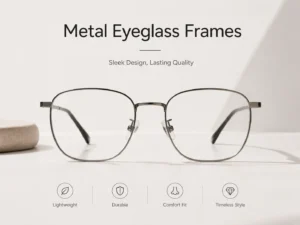
Metal Eyeglass Frames
Stainless steel is the workhorse — affordable, durable, takes plating well. We produce full-rim, semi-rimless, and rimless configurations. Hinge types include standard barrel, flexhinge, and clip-on variations.
Metal Frames →
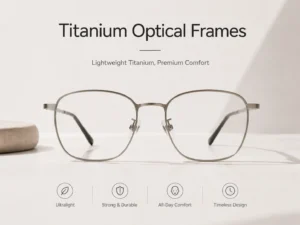
Titanium Optical Frames
Pure titanium and beta titanium. Lighter than stainless, stronger than aluminum, hypoallergenic. Titanium production runs on separate equipment from our steel lines — different tooling, different welding process, different QC checklist.
Titanium Frames →
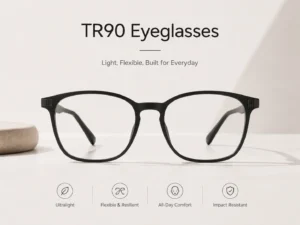
TR90 Eyeglasses
Injection-molded TR90 — flexible, lightweight, a fraction of the cost of acetate. Popular for kids’ frames and sport-adjacent optical. Takes color well and holds up in daily wear without stress cracking.
TR90 Frames →
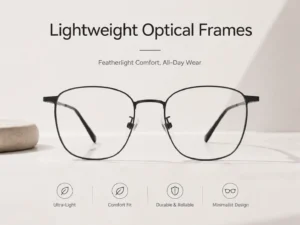
Lightweight Optical Frames
Ultem, beta titanium, and ultra-thin acetate constructions for buyers targeting the comfort and premium-positioning segment. Some of our lightest frames come in under 10 grams. Worth specifying early — material selection locks in at tooling stage.
Lightweight Options →
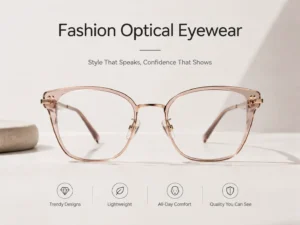
Fashion Optical Eyewear
Fashion optical doesn’t mean cheap. Our fashion frame line covers oversized acetate, architectural metal, mixed-material constructions. We track seasonal silhouette trends and our design team can brief you on what’s moving before you commit to tooling.
Fashion Frames →
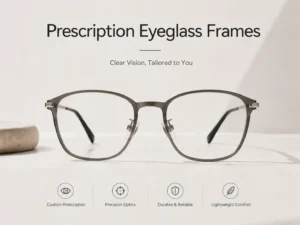
Prescription Eyeglass Frames
RX-ready frames built to optical industry tolerances — correct A/B/DBL measurements, stable lens retention, hinge tension calibrated for repeated use. We supply optical retailers and dispensing chains who have specific RX fit requirements.
RX Frames →
Frame Materials
Eyeglass Frame Materials
Material choice locks in weight, cost, production method, and perceived quality all at once. We’ll tell you what makes sense for your product and price point rather than defaulting to whatever runs fastest on our floor. More detail at eyewear materials →
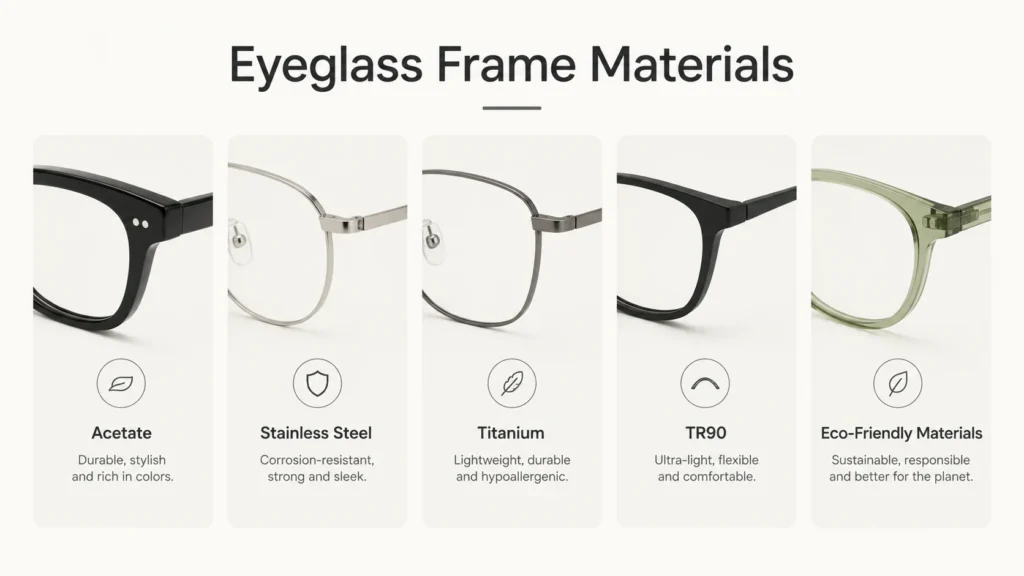
Acetate
Acetate Optical Frames ManufacturerThe classic choice for premium eyewear. Rich color depth, layered patterns, a tactile weight that reads as quality in-hand. We use sheet acetate, not injected cellulose — there's a difference in how it polishes and how it holds color over time. CNC milled and hand-finished in our own workshop.
Stainless Steel
Metal Optical Frames ProductionMost of our metal frame volume is stainless. It's the practical choice — stable tolerances, good for plating (gold, gunmetal, rose gold, matte black), and holds hinge geometry better than aluminum over repeated use cycles. Full-rim, semi-rimless, and rimless all available.
Titanium
Titanium Optical Frames ManufacturerPure titanium is 45% lighter than steel at roughly equivalent strength. Corrosion-resistant, hypoallergenic, and carries a premium positioning that brands in the optical and medical eyewear space genuinely use as a selling point. Beta titanium adds flexibility — good for spring-temple constructions.
TR90
TR90 Eyeglasses ManufacturingInjection-molded nylon-based polymer. Flexible, impact-resistant, and light. It doesn't have the same hand feel as acetate but it's significantly more durable under everyday stress — hinges don't snap, temples don't crack in cold weather. Good fit for value-positioned lines and kids' optical.
Ultem
Ultem Optical Frame ProductionPolyetherimide — stiffer than TR90, better memory retention, resistant to heat and chemical exposure. Used in medical eyewear and premium sport-adjacent optical. Lighter than standard plastics. Not every factory works with it because it requires higher processing temperatures and tighter mold tolerances.
Eco-Friendly Materials
Sustainable Optical FramesBio-acetate (castor oil-based), recycled TR90, and recycled stainless options for brands building sustainability claims. The performance is comparable to conventional materials. Certificates and material traceability documentation provided. Growing demand from EU and North American buyers.
OEM Optical Frames Manufacturing
The buyers who come to us for OEM are not all the same. Some are optical brands with a product development team who just need a capable factory. Some are fashion brands adding eyewear to their accessories line for the first time — they know what they want the product to feel like but have never written a frame spec sheet. We work with both, and we've learned not to assume which one you are.
- Custom logo & branding — temple engraving, laser marking, UV print, acetate inlay logo, metal badge; artwork prep included
- Frame shape development — new mold design from your reference or concept; 3D modeling and prototype before tooling commitment
- Temple & hinge design — standard barrel, flexhinge, spring hinge, clip-on configurations; custom temple width and length
- Color customization — acetate patterns, injection color for TR90/Ultem, plating specs for metal frames; Pantone matching available
- Packaging — branded hard case, microfiber cloth, hang-tag box, retail display; we design to your spec or adapt existing packaging formats
- Private label production — use existing frames from our catalog with your branding applied; fastest route to market, lower tooling investment

What an OEM project actually looks like
You send a brief — a sketch, a reference pair, or a list of requirements. We ask the questions that matter early: RX compatibility, hinge type, lens base curve, temple width, logo placement. Then we build a sample.
You review the sample against the brief. If something's off — hinge tension, nose bridge fit, color — we fix it before bulk. One or two revision rounds is typical. Once you approve the sample, we lock the spec sheet and move to production.
Sampling: 7–14 days. Bulk after approval: 30–45 days. We send you production milestone updates without you having to chase us for them.
Discuss Your Project Private label options →Popular Optical Frame Styles
Silhouette trend timing matters in optical. Oversized acetate peaked and slowed. Slim metal came back. Geometric shapes are growing in the mid-premium segment. We track this and can brief you on what's moving in your target market before you commit to tooling investment.

Square Frames
Perennial for men’s optical. Works in acetate and metal. Sharp corners read as structured and architectural.
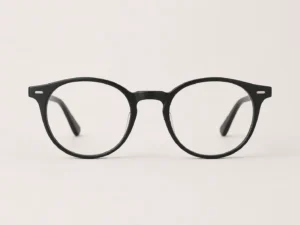
Round Frames
Back in a serious way. Most popular in thin metal and lightweight acetate. Key spec is lens diameter — this is where buyers often get it wrong.
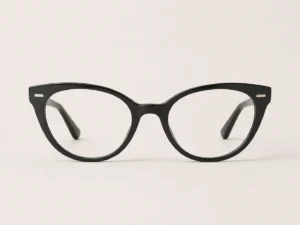
Cat Eye Frames
Strong in women’s fashion optical. Acetate handles the upswept geometry better than metal for most designs. Hinge placement is critical for comfort.
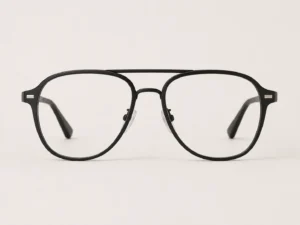
Aviator Optical Frames
Thin metal construction. The teardrop geometry requires precise lens cutting. Popular with unisex positioning and heritage-aesthetic brands.
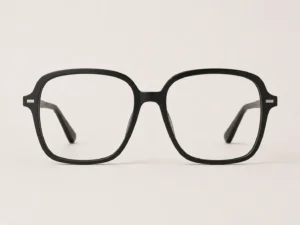
Oversized Eyeglasses
Statement pieces. Acetate handles the size well; metal needs reinforcement at the bridge. Good for fashion-forward brands targeting bold product lines.
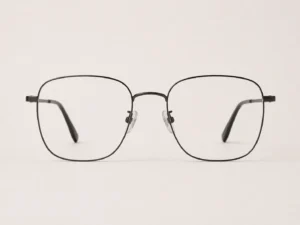
Minimalist Metal Frames
Ultra-thin stainless or titanium. The design is in what’s not there. High tolerance requirements — these are harder to produce consistently than they look.
How We Work
Optical Frame Manufacturing Process
Eight stages from design through delivery. Each one has a checkpoint before the next begins. We’ve found that skipping or compressing these checkpoints is where production problems start — so we don’t. Full detail at eyewear manufacturing →
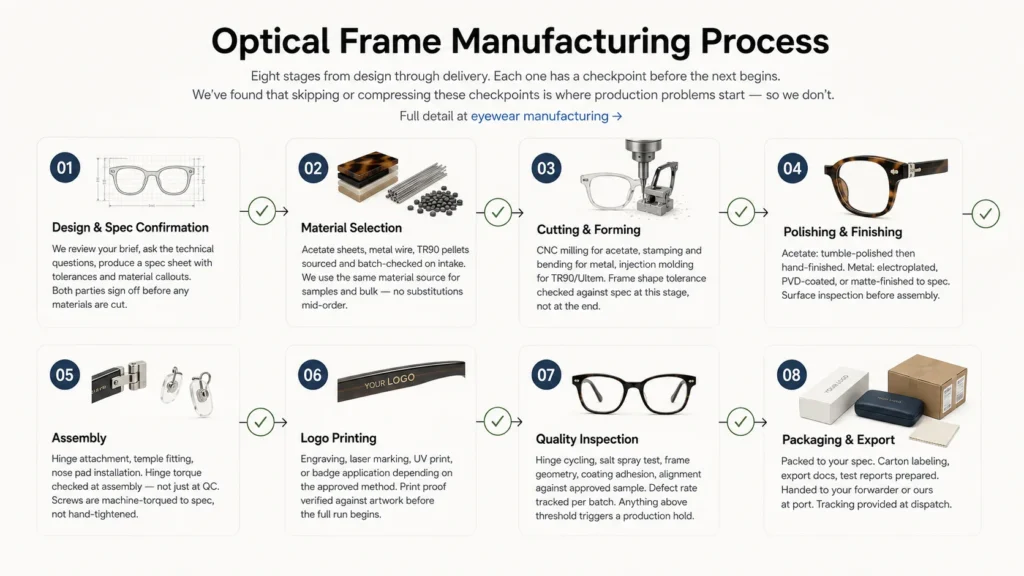
Design & Spec Confirmation
→
We review your brief, ask the technical questions, produce a spec sheet with tolerances and material callouts. Both parties sign off before any materials are cut.
Material Selection
→
Acetate sheets, metal wire, TR90 pellets sourced and batch-checked on intake. We use the same material source for samples and bulk — no substitutions mid-order.
Cutting & Forming
→
CNC milling for acetate, stamping and bending for metal, injection molding for TR90/Ultem. Frame shape tolerance checked against spec at this stage, not at the end.
Polishing & Finishing
→
Acetate: tumble-polished then hand-finished. Metal: electroplated, PVD-coated, or matte-finished to spec. Surface inspection before assembly.
Assembly
→
Hinge attachment, temple fitting, nose pad installation. Hinge torque checked at assembly — not just at QC. Screws are machine-torqued to spec, not hand-tightened.
Logo Printing
→
Engraving, laser marking, UV print, or badge application depending on the approved method. Print proof verified against artwork before the full run begins.
Quality Inspection
→
Hinge cycling, salt spray test, frame geometry, coating adhesion, alignment against approved sample. Defect rate tracked per batch. Anything above threshold triggers a production hold.
Packaging & Export
→
Packed to your spec. Carton labeling, export docs, test reports prepared. Handed to your forwarder or ours at port. Tracking provided at dispatch.
Quality Control
Optical Frame Quality Control
Optical frames go on someone’s face and stay there for ten or twelve hours a day. Hinge failure, coating that peels after three months, a bridge that corrodes — these are returns, complaints, and reputation damage. We run six QC checkpoints to catch problems before they ship. More detail at quality control →
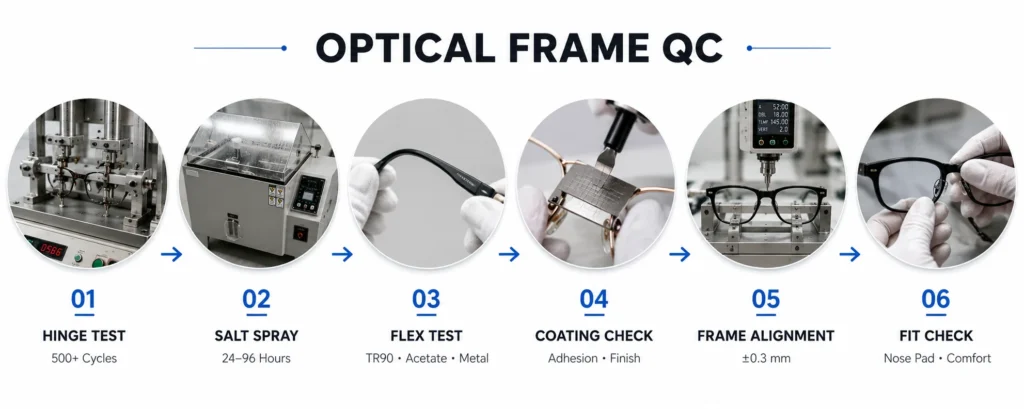
Hinge Durability Test
Temples cycled 500+ times on a mechanical test rig. Spring hinges and barrel hinges tested separately. Torque measurement before and after.
Salt Spray Test
Metal frames and hardware exposed to salt fog for 24–96 hours depending on the plating spec. Checks for corrosion resistance and coating adhesion under stress.
Frame Flexibility Test
Temples bent to a defined angle and held. Checks for stress whitening in acetate, fatigue cracks in metal, and material memory in TR90/Ultem.
Coating Adhesion Inspection
Cross-hatch adhesion test on plated metal. Acetate surface checked for polish uniformity and clarity. UV coatings tested for bubbling and delamination.
Frame Alignment & Geometry
A/B/DBL measurements verified against spec. Temple alignment, bridge height, lens tilt checked against approved sample. Tolerance ±0.3mm on critical dimensions.
Nose Pad & Fit Check
Nose pad adjustment range verified. Temple length and tip comfort checked. For RX-ready frames, we verify the lens retention force meets industry tolerances.
Wholesale Optical Frames Supply
We supply optical retailers, chain stores, and distributors who need consistent volume at factory pricing. The difference between buying factory direct and buying through a trading company tends to show up as 20–30% on your cost sheet. For businesses doing regular volume, that's a meaningful number.
We keep a range of in-stock optical frame styles for fast-turnaround orders. For buyers running a wider assortment, mixed-model wholesale lets you combine multiple styles in one container without needing to hit MOQ separately on each SKU.
Reorder cycles vary by buyer — some reorder quarterly, some restock monthly. We track your order history and can set up a supply schedule that smooths out your inventory management. Retail-ready packaging is standard on all wholesale orders.
Wholesale Pricing →- Low MOQ from 300 pcs per style
- Mixed-model orders in one shipment
- In-stock styles for fast dispatch
- Retail-ready packaging included
- Volume pricing: 1K / 5K / 10K+ tiers
- FOB and CIF shipping options
- OEM customization available on wholesale
- Dedicated account contact for reorders
Markets We Serve
Our buyers come from different industries and use the product differently. That affects how we approach the project — a fashion brand needs different things from a spec sheet than an optical dispensing chain.
Optical Retailers
RX-ready frames, consistent fit standards, stable reorder supply. We know the optical retail spec requirements and work to them.
Eyewear Brands
Full OEM and private label programs. From product development through seasonal production. We’ve worked with brands at every stage of scale.

E-commerce Sellers
Lower MOQ tolerance, faster sampling, retail-ready packaging. We’ve helped dozens of online eyewear sellers launch and scale their catalog.

Distributors
Mixed-model orders, stable supply scheduling, export documentation handled. Regional distributors managing a broad SKU range are a core buyer type for us.

Chain Stores
Volume pricing, consistent quality across batches, retail-ready packaging with your store branding. We support seasonal buying programs.

Fashion Brands
Eyewear as an accessories category extension. We help fashion brands develop frames that match their aesthetic without needing prior eyewear industry knowledge.
What Makes a Difference
in Practice
These aren't marketing claims — they're things our buyers tell us after they've worked with us for a year. We'd rather show you than tell you, which is why we encourage buyers to start with a sample run.
Experienced Optical Frame Factory
15 years producing optical frames specifically — not an eyewear factory that added optical as an afterthought. We understand RX tolerances, dispensing requirements, and the difference between a fashion frame and a prescription-ready one.
Stable Production Capacity
500,000+ units per month total capacity. Optical frames account for roughly 35% of our volume. We plan production schedules in advance — you're not competing with a rush order that jumped the queue.
Fast OEM Development
7–14 day sampling for most styles. In-house 3D modeling and rapid prototype capability before tooling investment. We can often show you a physical mockup before you've committed to mold costs.
Strict QC Standards
Six-point QC process running through production, not just at the end. Defect rate data tracked and shared with buyers on request. Third-party inspection (SGS, Intertek, Bureau Veritas) welcomed and coordinated by us.
International Export Experience
We've shipped to 60+ countries and know the documentation requirements for each major market. Test reports, certificates of origin, FDA and CE compliance documentation — all prepared before your container loads.
Communication That Doesn't Disappear
Every order has a named account contact. You get production milestone updates. If something changes during manufacturing, you hear about it from us — not when you open the cartons. This sounds basic but it's not how most factories operate.
Optical Frame Manufacturing Guides
How Optical Frames Are Made — From Material to Finished Frame
A step-by-step breakdown of the production process for acetate and metal optical frames, with notes on where quality problems typically originate.
MaterialsAcetate vs TR90 for Optical Frames: The Buyer's Comparison
Weight, cost, production time, finish quality — the comparison buyers need before deciding which material fits their product line.
MaterialsBest Materials for Eyeglass Frames in 2025 — A Manufacturer's View
We make frames in all six major materials. Here's an honest breakdown of where each one makes sense and where it doesn't.
MaterialsTitanium vs Standard Metal Glasses Frames: Production Cost and Performance
The price difference is real. Whether it's worth it depends on your positioning, your market, and what your buyers actually care about.
Brand BuildingHow to Start an Eyewear Brand: What the Factory Side Looks Like
First-time brand builders ask us the same questions. This is our honest guide to what the OEM process involves and what it costs.
OEM GuideThe Optical Frame Manufacturing Guide for Importers and Brand Buyers
MOQs, tooling costs, lead times, certifications — everything a first-time optical frame buyer needs to know before placing an order.
FAQ — Optical Frames Manufacturing
Ready to Develop Your
Optical Frame Line?
Send us your project brief — frame type, materials, quantities, any reference styles. We'll come back with a real assessment and quote within one business day. No runaround.