
Driving · Fishing · Sports · Outdoor · Everyday
Polarized Sunglasses
Polarized sunglasses designed for driving, sports, fishing, outdoor activities, and everyday use.
Polarized is one of those words people see everywhere. Some buyers know exactly why they want it. Some just know the lens feels easier outside. Both are fine. What matters is choosing the right style for the use: road glare, water glare, beach light, sport movement, or normal daily wear.
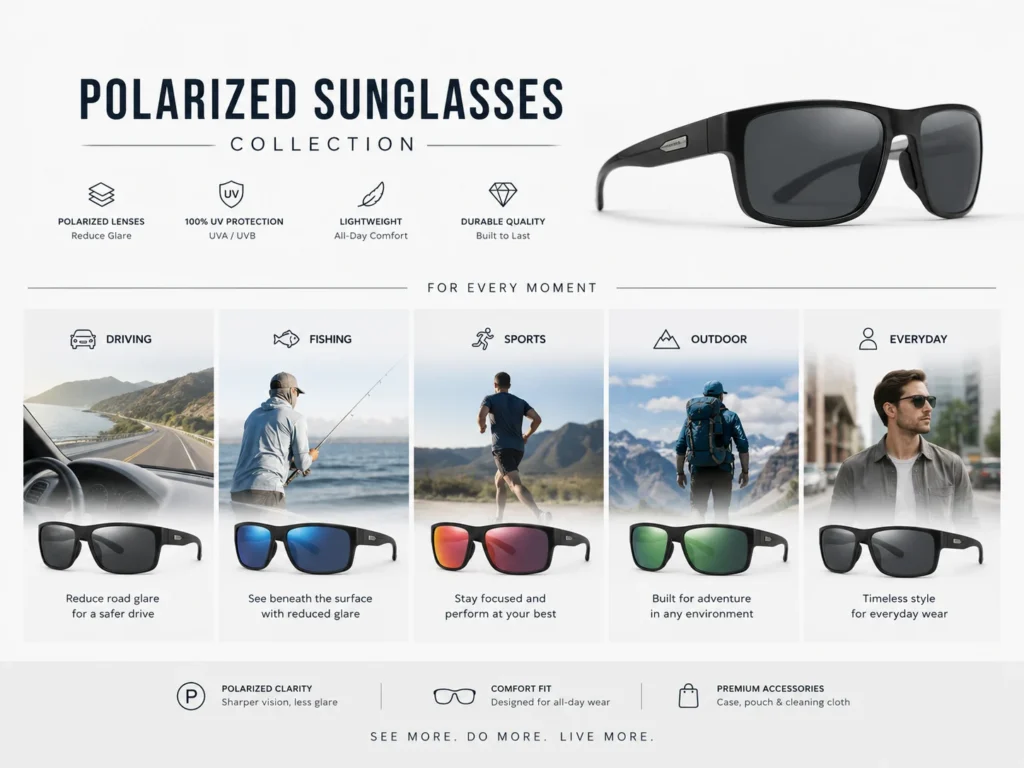
One Lens Idea. Many Product Directions.
Polarized Sunglasses Categories
This is usually where the page should start. Not with MOQ. Not with factory workflow. Just the products. People looking at polarized sunglasses want to know what kind of pair fits their use.
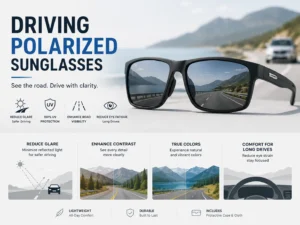
Driving Polarized Sunglasses
Road glare. Wet pavement. Bright windshields. A good driving lens should be comfortable, not simply dark.
Driving use →
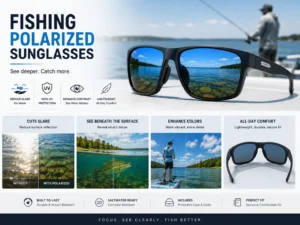
Fishing Polarized Sunglasses
This is the classic use case. Water glare is exactly where polarized lenses start to make obvious sense.
Fishing use →
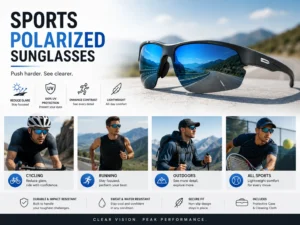
Sports Polarized Sunglasses
For outdoor movement. The lens matters, yes. But grip, frame weight, and coverage matter just as much.
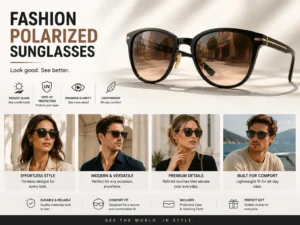
Fashion Polarized Sunglasses
Here the frame has to look right first. The polarized lens adds a useful reason to buy.
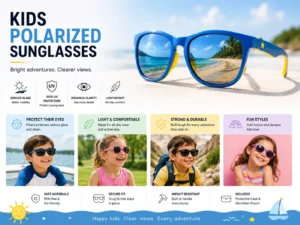
Kids Polarized Sunglasses
Keep it light. Keep it comfortable. Adult styling does not always shrink well for kids.
Kids styles →
Polarized Lens Benefits
Glare is the whole point. Roads. Water. Snow. Beach reflections. Glass. That is where polarized lenses start earning their place.
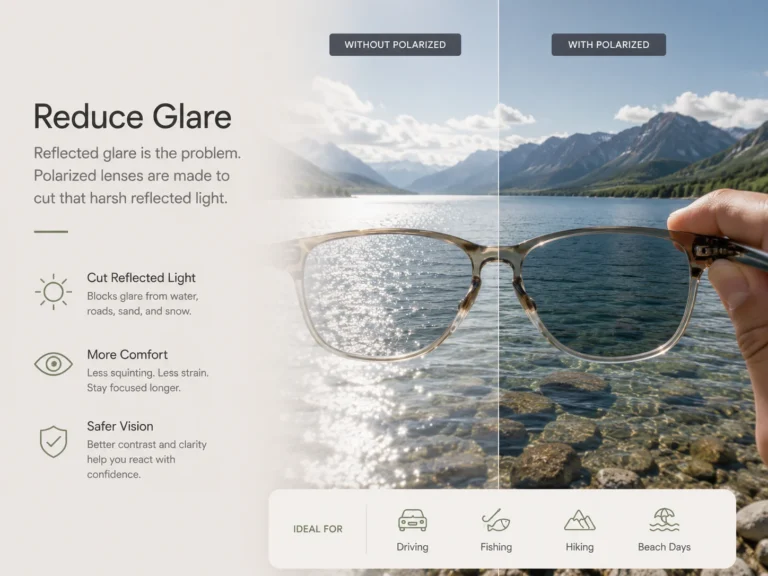
Reduce Glare
Reflected glare is the problem. Polarized lenses are made to cut that harsh reflected light.
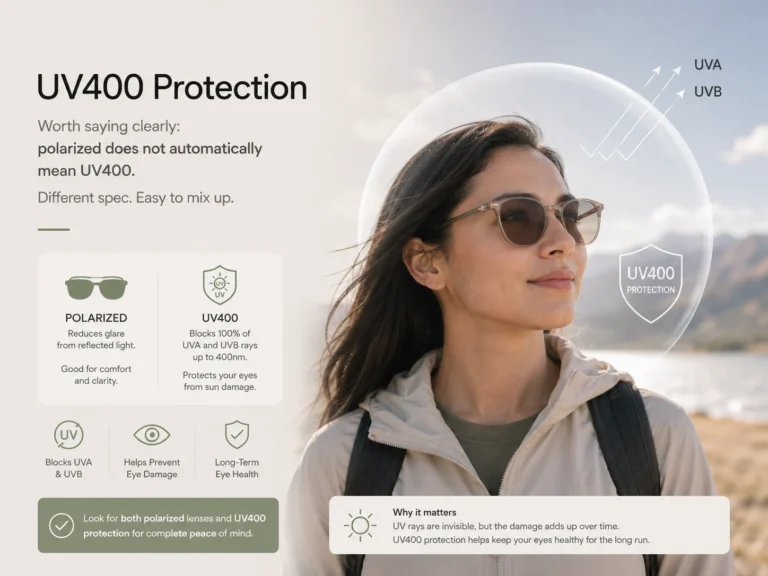
UV400 Protection
Worth saying clearly: polarized does not automatically mean UV400. Different spec. Easy to mix up.
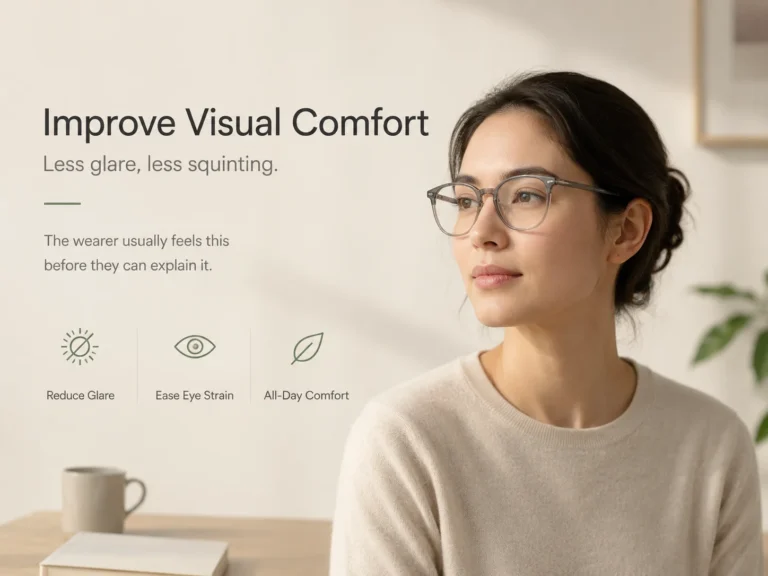
Improve Visual Comfort
Less glare, less squinting. The wearer usually feels this before they can explain it.
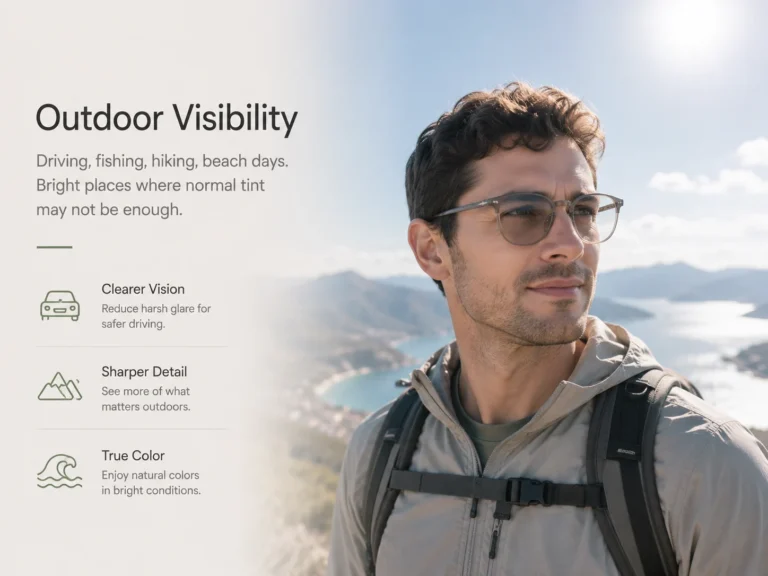
Outdoor Visibility
Driving, fishing, hiking, beach days. Bright places where normal tint may not be enough.
Polarized Lens Types
Most customers just say “polarized.” Behind that, there are a few lens choices. They do not feel the same. They do not cost the same either.
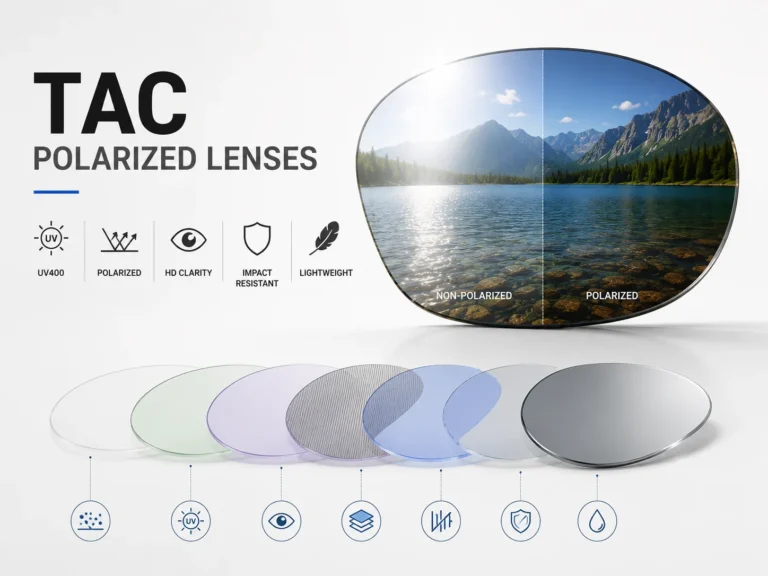
TAC Polarized Lenses
Most common for everyday sunglasses. Light, practical, and familiar in retail product lines.
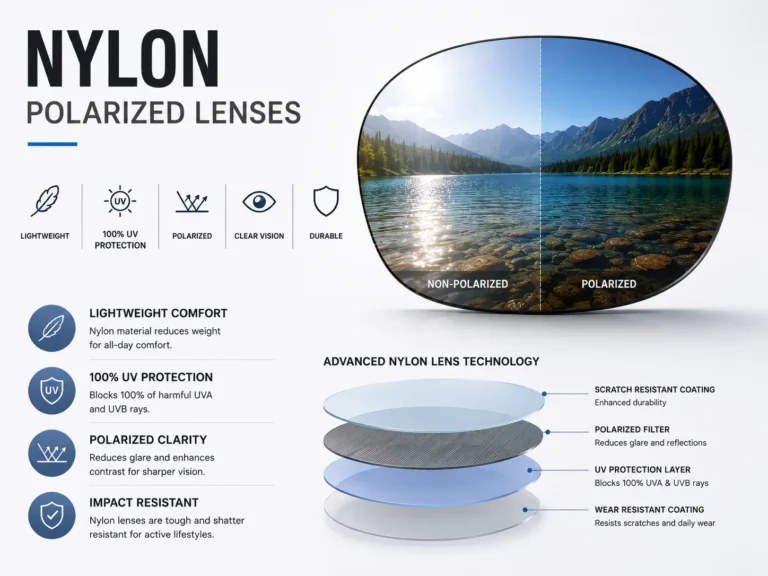
Nylon Polarized Lenses
Better suited for performance products. Not always needed, but useful when the line has a higher outdoor position.
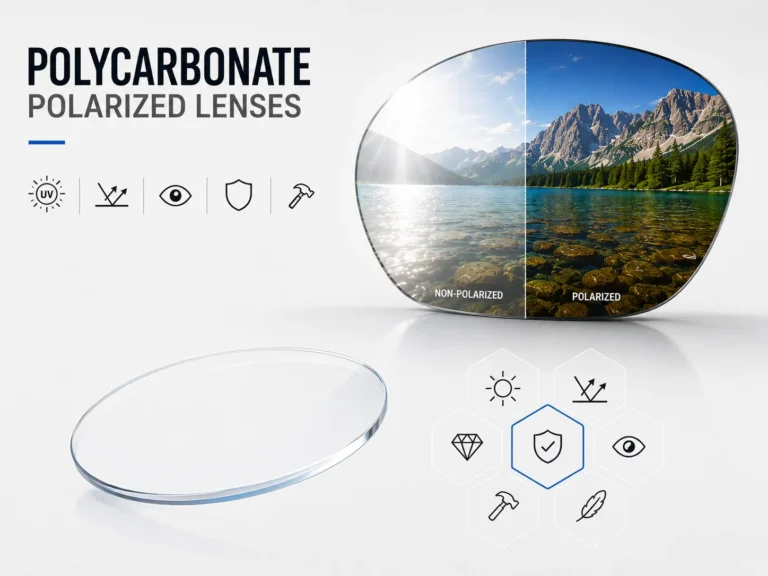
Polycarbonate Polarized Lenses
Light and impact-resistant. Often a good fit for sport, kids, and active outdoor categories.
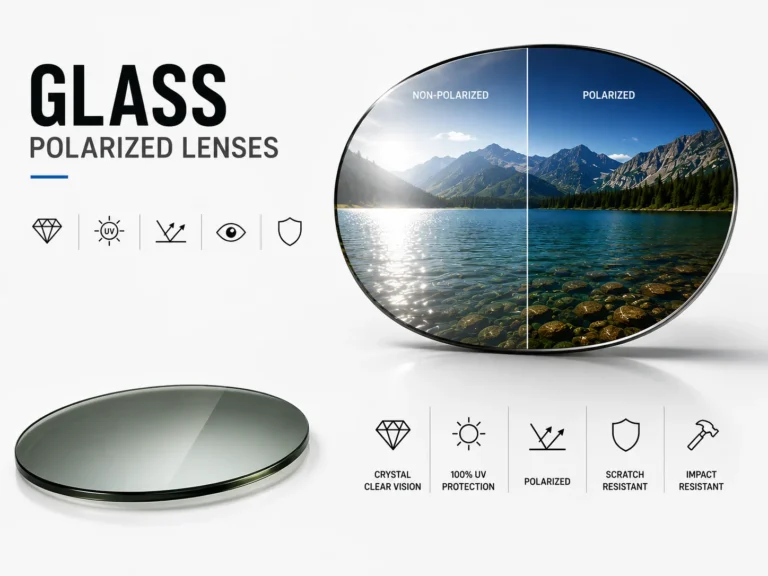
Glass Polarized Lenses
Clear, solid, heavier. Good optical feel, but not the usual answer for every product.
Frame Materials
Lens first, frame second? Maybe. But the frame is what people actually wear on their face. For a full breakdown, see /materials/.
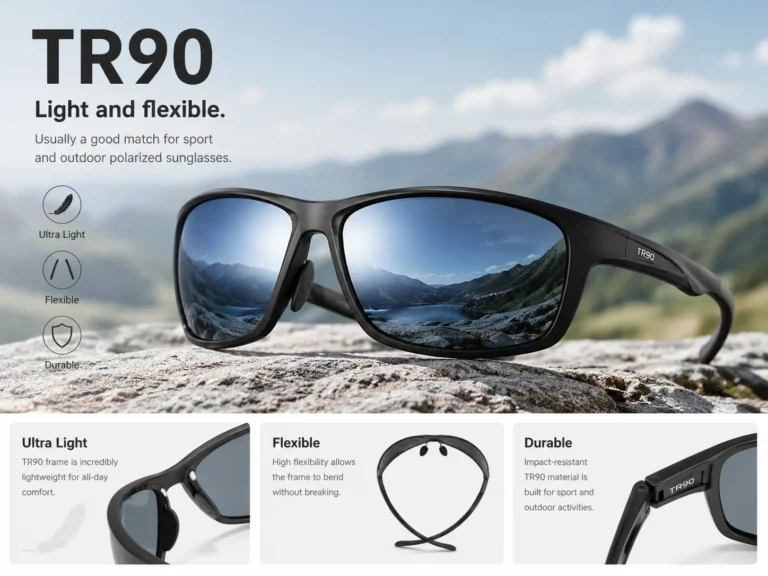
TR90
Light and flexible. Usually a good match for sport and outdoor polarized sunglasses.
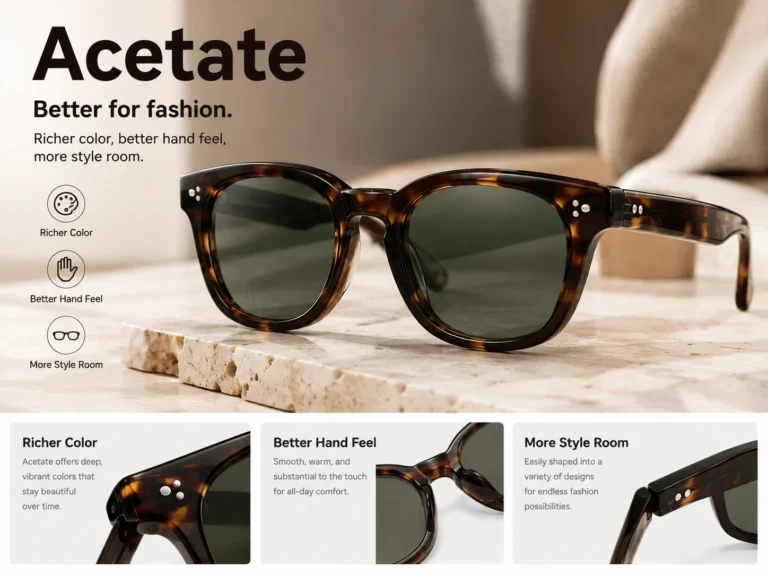
Acetate
Better for fashion. Richer color, better hand feel, more style room.
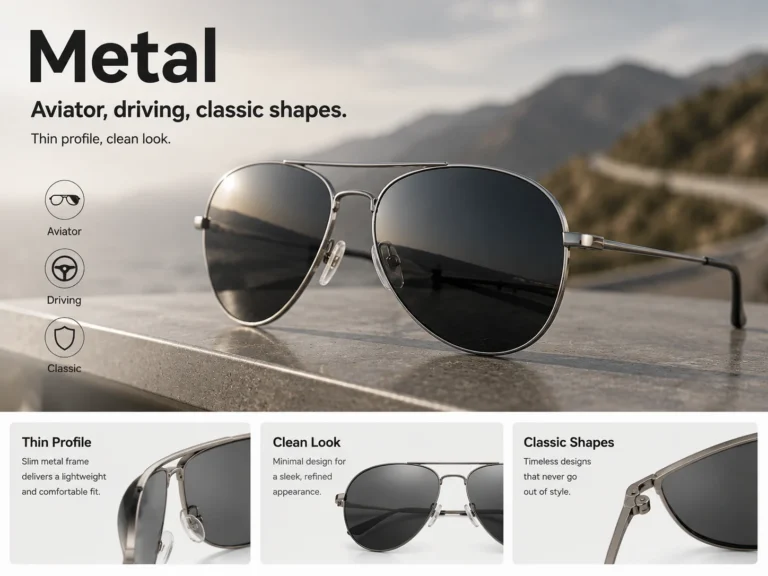
Metal
Aviator, driving, classic shapes. Thin profile, clean look.
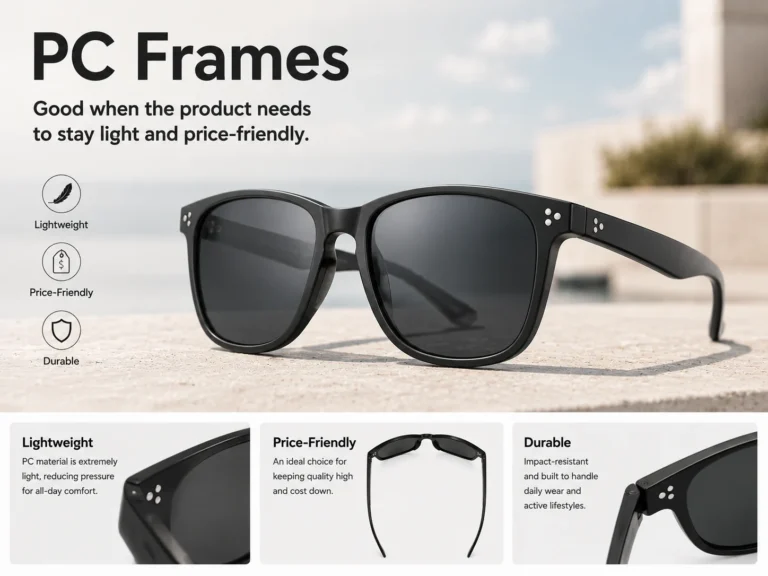
PC Frames
Good when the product needs to stay light and price-friendly.
Best Use Scenarios
Simple rule: follow the glare. If glare is part of the scene, polarized lenses probably belong in the conversation.
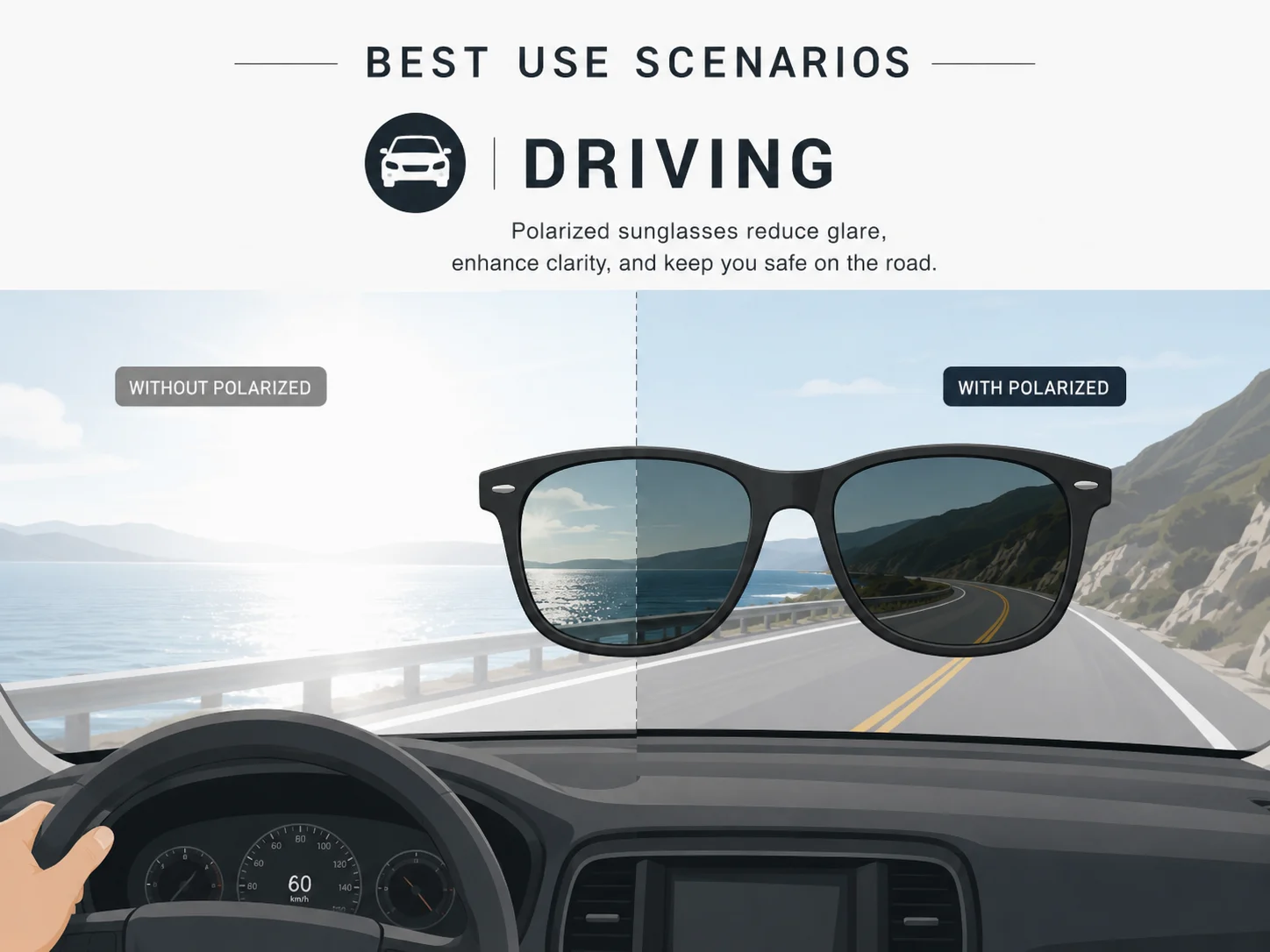
Driving
Useful for road glare, windshield reflections, and bright afternoon driving.
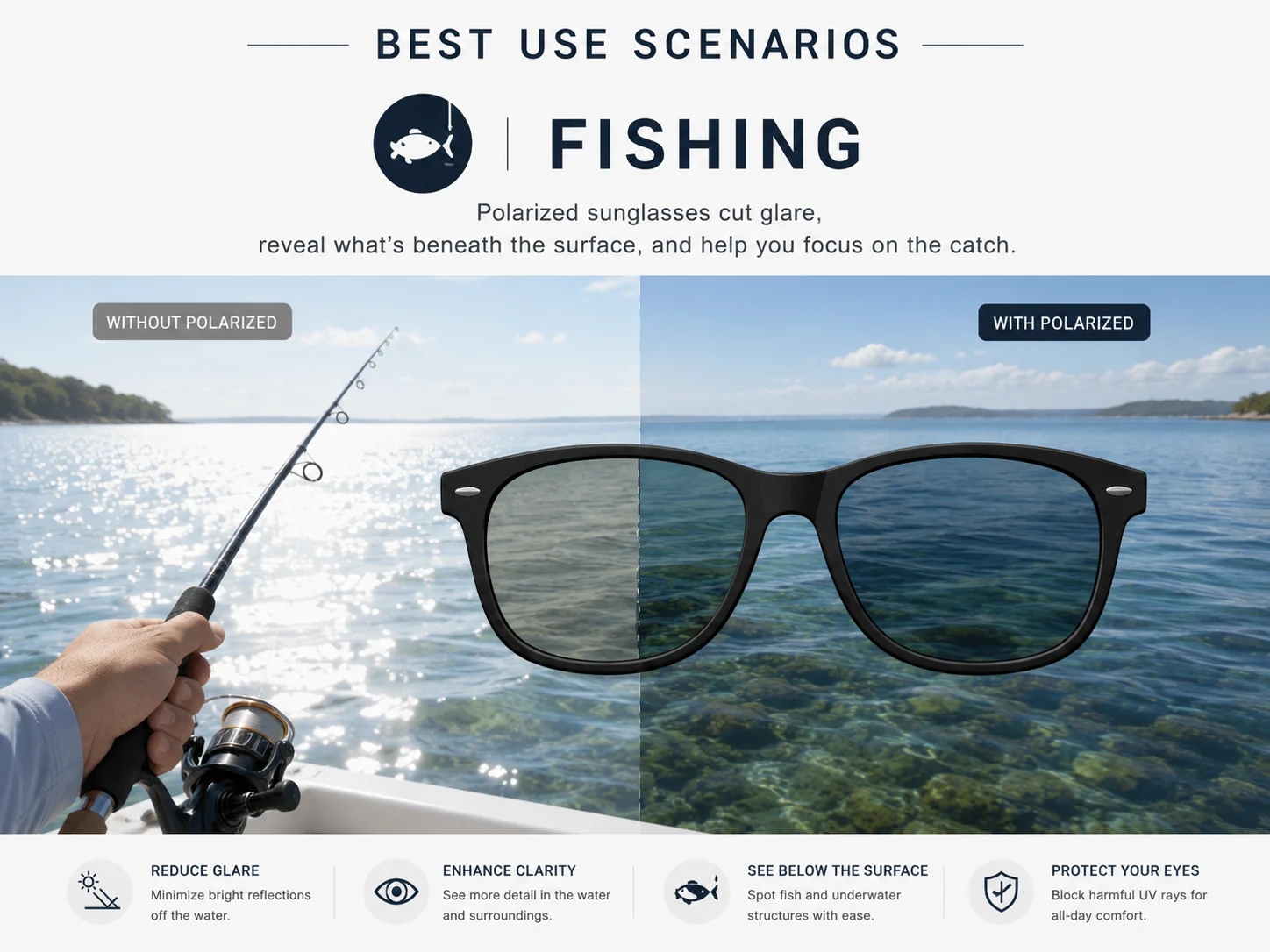
Fishing
Water glare is strong. Polarized lenses were made for this kind of problem.
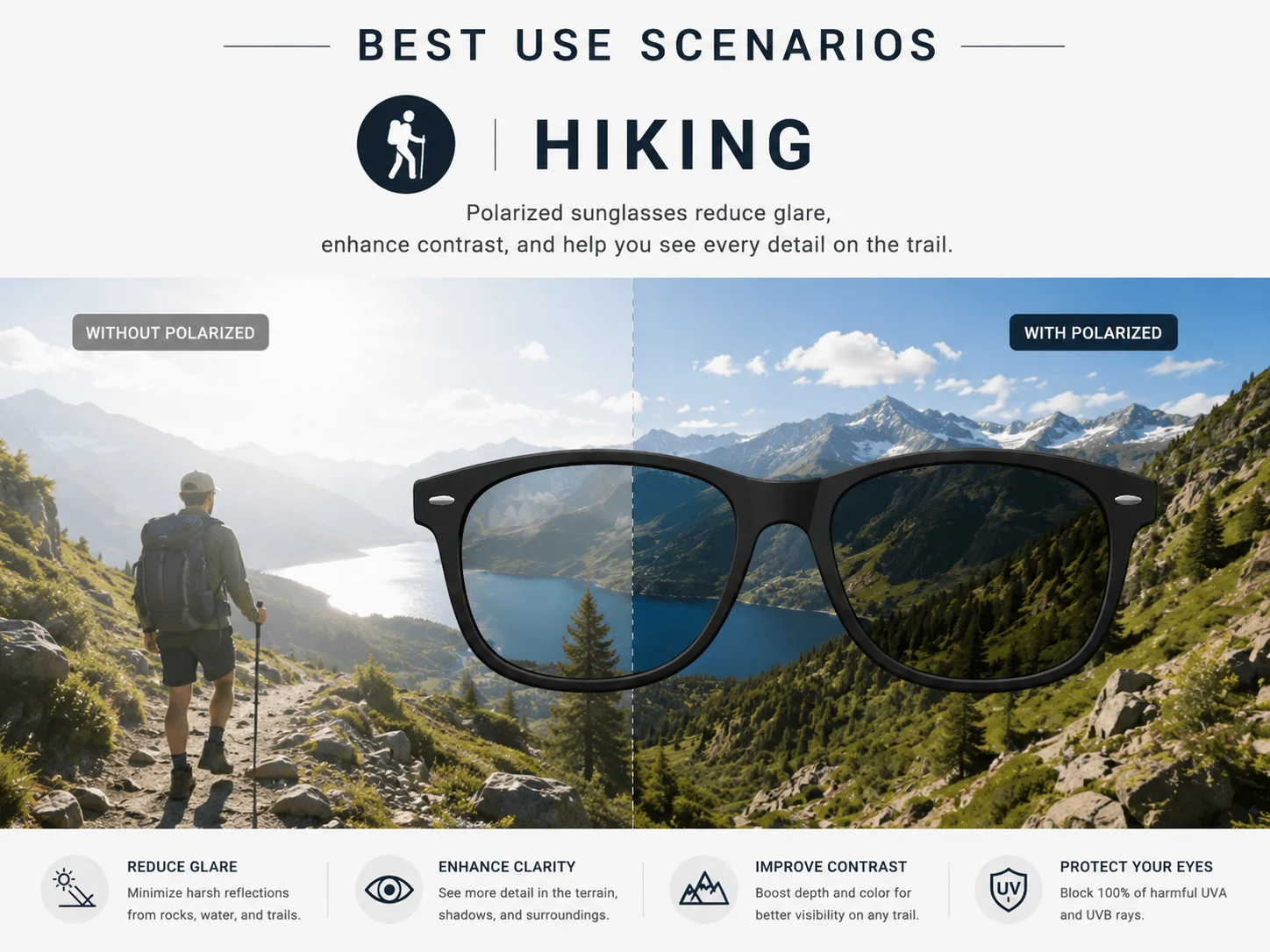
Hiking
Long outdoor wear, open trails, bright sky. Comfort becomes the benefit.
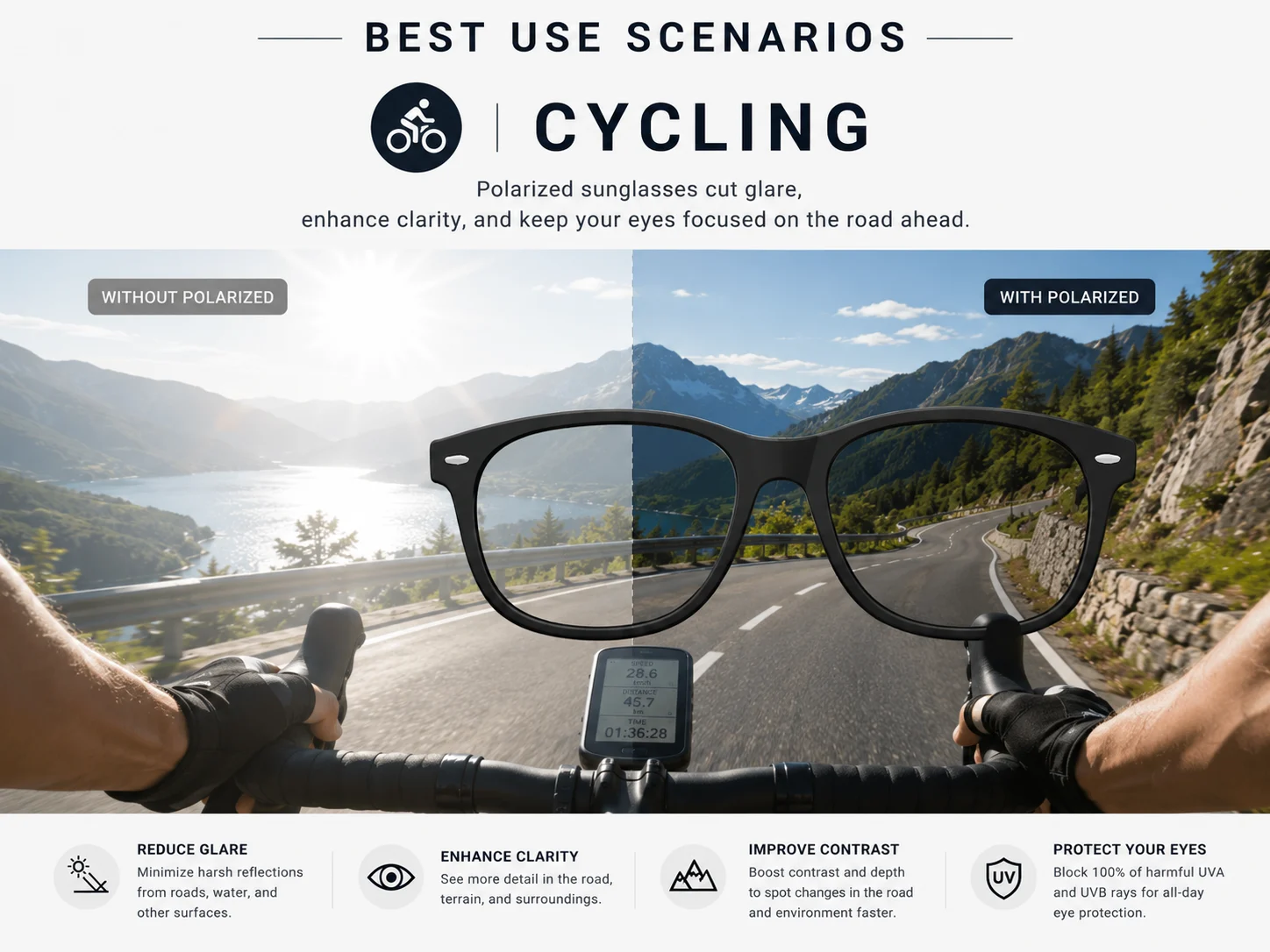
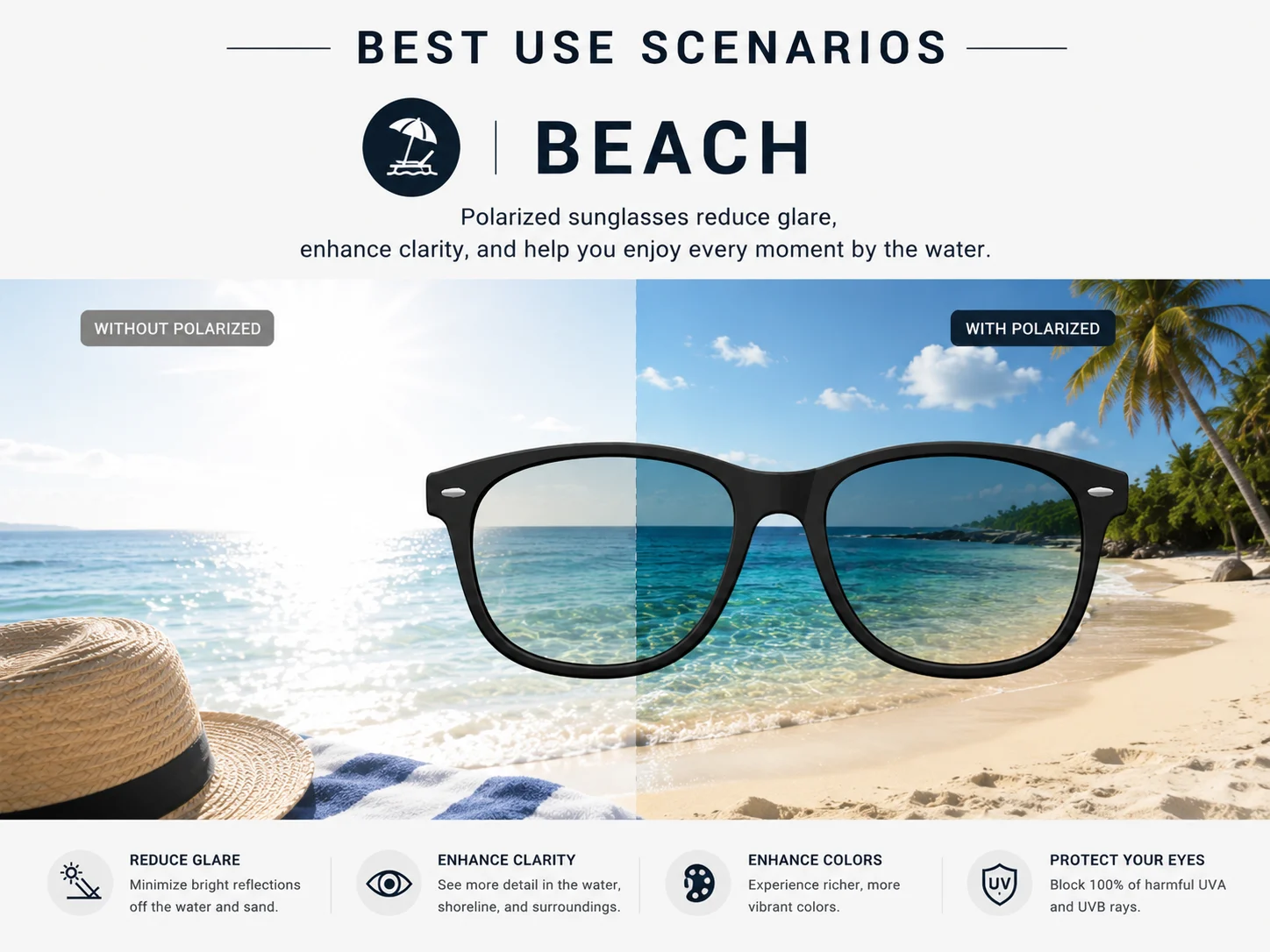
Beach
Sand, water, and open light. A very natural place for polarized sunglasses.
Comparison
Polarized vs Non-Polarized
Customers ask this all the time. Fair question. More detail here: polarized vs non-polarized sunglasses.
| Feature | Polarized | Non-Polarized |
|---|---|---|
| Glare Reduction | Yes. That is the main reason to use it. | No special glare filter. |
| UV Protection | Can be UV400. Needs checking. | Depends on the lens. |
| Driving | Excellent for road glare. | Basic brightness reduction. |
| Fishing | Very useful around water. | Usually not enough for strong water glare. |
| Everyday Use | Good for outdoor daily wear. | Fine for simple sun shading. |
Product Gallery
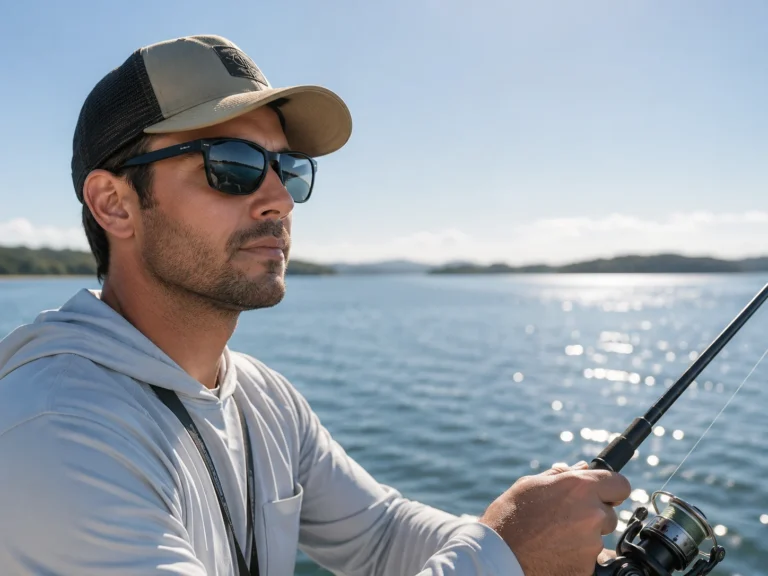
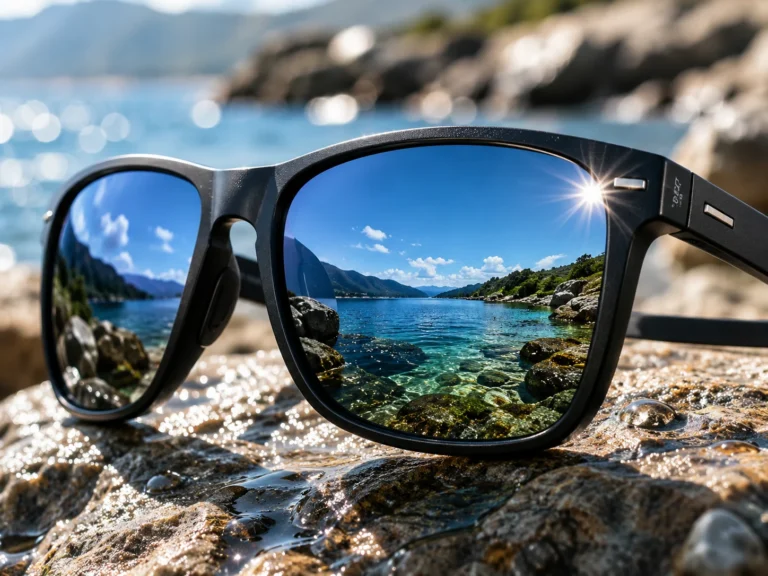
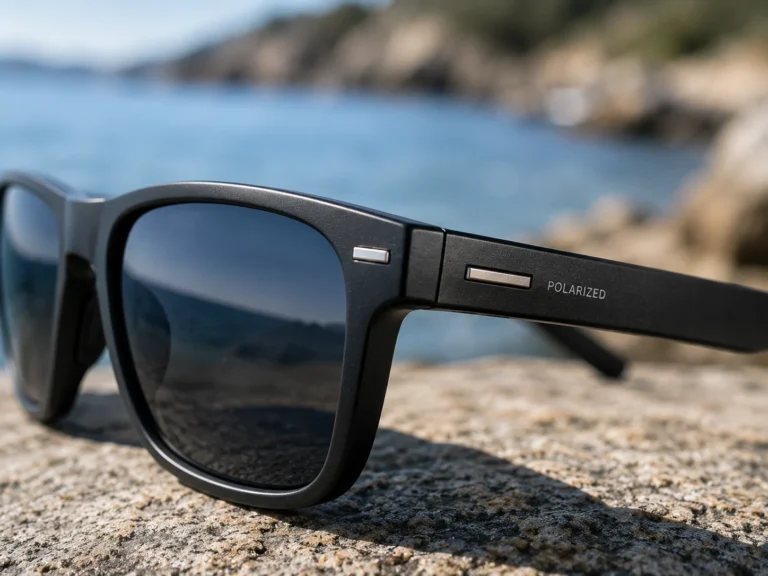
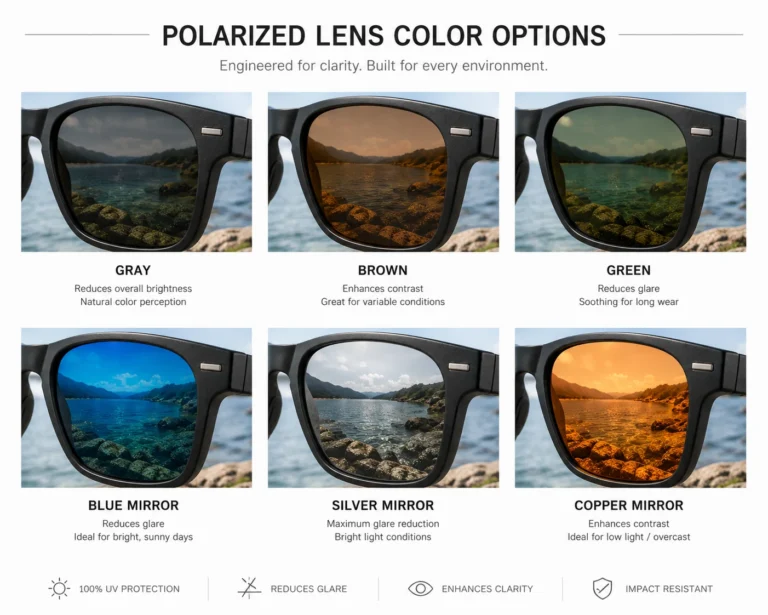
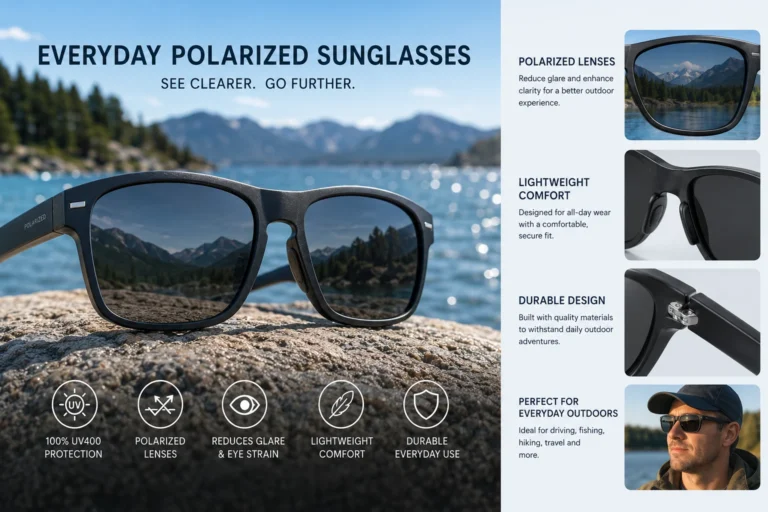
Show the lens. Show the frame. Show the use. One product photo is rarely enough for polarized sunglasses.

Buying Notes
A Few Notes Before Choosing
For driving, do not chase the darkest lens. That is a common mistake. A lens can be too dark and still not feel good on the road.
For fishing, side coverage helps. Glare does not only come from straight ahead.
For sports, the frame has to stay put. Lens performance will not save a slipping frame.
For fashion, shape still wins. People may like the polarized benefit, but they choose the pair they want to wear.
For kids, keep things light and simple. Oversized adult frames usually do not translate well.
Need ready styles? Start with wholesale polarized sunglasses. Need logo, lens colors, or packing changes? Go to custom sunglasses.
FAQ
Need Stock Styles?
Start with wholesale options if you need ready polarized sunglasses. Go custom only when you need logo, lens color, frame color, or packaging changes.