
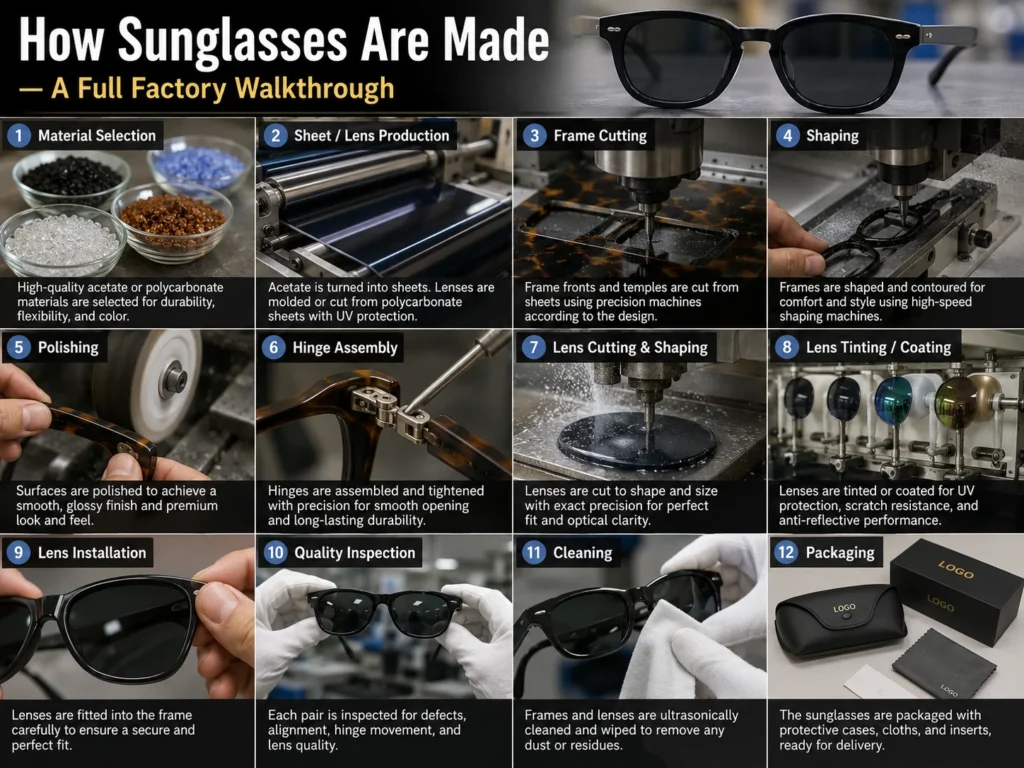


A pair of sunglasses looks simple when it sits on a retail shelf. Inside the factory, it is not simple at all. It passes through drawings, material racks, cutting dust, polishing wheels, lens tests, tired hands, and more inspections than most buyers imagine.
A few years ago, a buyer visited us and picked up a tray of unfinished acetate fronts. He looked genuinely confused.
“These become sunglasses?”
Fair question.
At that stage they looked awful. Rough edges. Dust everywhere. No shine. No lenses. Just thick pieces of material that vaguely resembled eyewear if you were being generous.
Later that same afternoon, after polishing and fitting, he held the finished version and just nodded.
That moment comes back to me whenever people ask how sunglasses are made.
Because most people imagine a cleaner process than reality.
One machine. One neat production line. Material goes in, sunglasses come out.
That would be nice.
Real production feels more like organized interruption.
Some steps move fast. Others slow everything down. One team finishes their part and another discovers a small issue nobody expected. A sample fits beautifully until the production batch behaves slightly differently. A lens that looked perfect under factory lights suddenly feels wrong in daylight.
This is normal.
If you source sunglasses often, you eventually stop asking “how fast can you make this?” and start asking better questions.
So here is the less polished answer. The factory version.
Where Most Projects Actually Begin
Not with a perfect drawing.
I wish.
Sometimes buyers send excellent technical files. Proper dimensions. Material notes. Lens specs. Packaging already defined. Those jobs move smoothly.
Most do not start like that.
We get screenshots. Product links. Mood boards. Competitor photos.
One message I still remember simply said:
“Can you make this but better?”
No explanation beyond that.
Eventually vague ideas have to become actual manufacturing numbers. Bridge width. Temple length. Front curve. Lens thickness. Hinge spec. Logo placement.
People outside production underestimate how unforgiving fit can be. A design can look fantastic on a render and feel terrible on a real face.
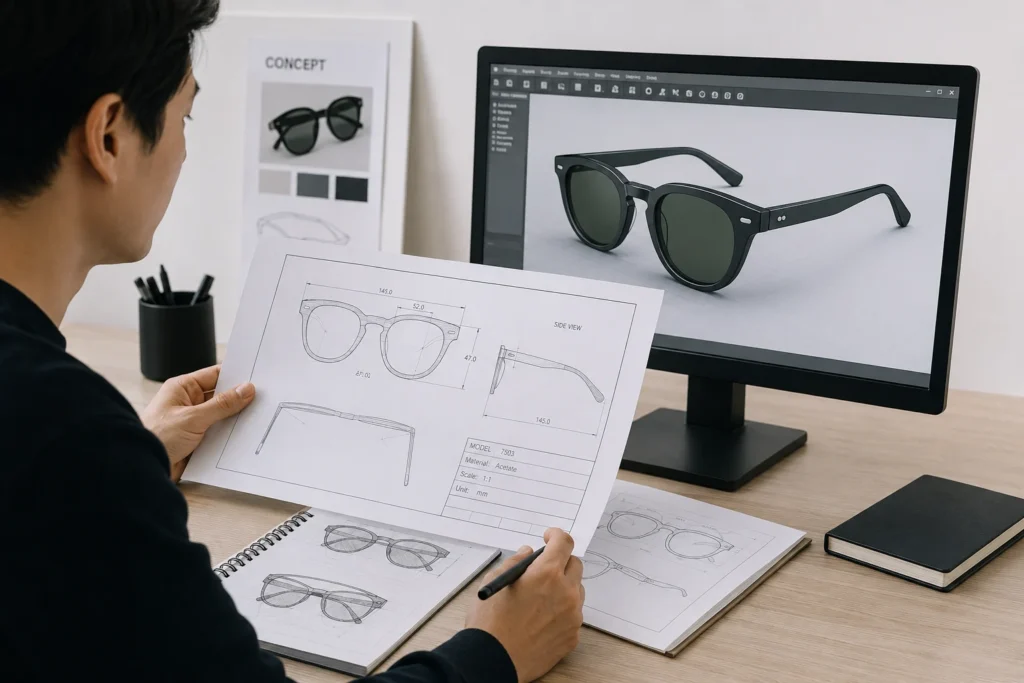
A nice sketch is easy. A manufacturable design is something else.
Material Decisions Usually Predict Future Problems
This sounds dramatic, but it is often true.
Once material is chosen, the personality of the project changes.
Acetate projects behave one way. TR90 behaves another. Metal can be cooperative for days, then become irritating over something tiny.
Acetate has character. Buyers like that. Nice depth. Premium hand feel. Better visual warmth than cheap generic plastic.
Acetate also asks for patience.
Heat it badly and it reminds you.
Rush polishing and it reminds you again.
TR90 is usually less emotional. Lighter. Efficient. More practical for commercial volume. Sports buyers tend to like it.
Metal looks elegant until plating, welding, or alignment starts causing arguments.
Lenses deserve more serious discussion than they usually get.
Buyers can spend twenty minutes debating logo engraving and barely touch lens performance.
That always feels backwards.
| Material | Typical Use | What Usually Causes Trouble |
|---|---|---|
| Acetate | Fashion and premium collections | Polish inconsistency, warping, waste, finishing defects. |
| TR90 | Sports and commercial volume | Mold behavior, shrinkage, trimming issues. |
| Metal | Aviators and slim designs | Alignment, plating flaws, hinge geometry. |
| Polarized lenses | Outdoor and performance products | Color matching, optical comfort, coating issues. |
When It Finally Starts Looking Like Sunglasses
This is the part visitors enjoy.
Machines moving helps.
Acetate sheets go in. Frame shapes emerge.
Still ugly, though.
That surprises people every time.
CNC operators notice small things long before anyone else does. The machine sounds slightly different. Edge finish changes. Resistance feels off.
You spend enough time around production and equipment starts communicating in annoying little ways.
TR90 feels more predictable until it isn’t.
Bad mold behavior spreads problems quickly because consistency works both ways.
Metal production is less visually exciting but somehow equally stressful.
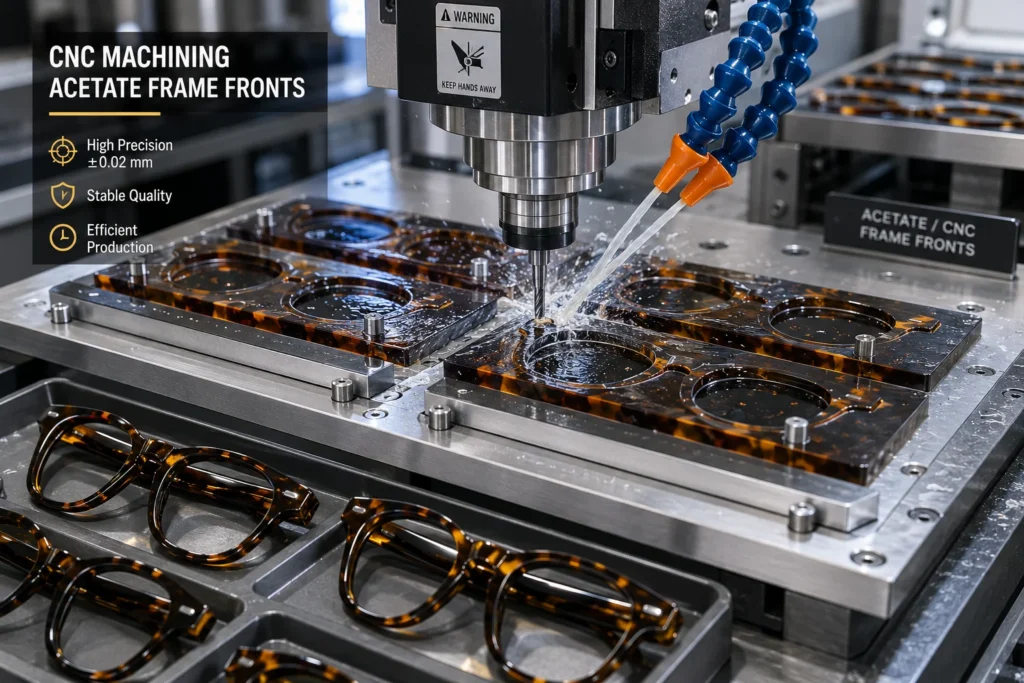
This is usually the first point where non-factory visitors recognize the product.
This Is Where Cheap Product Starts Revealing Itself
I probably sound biased here.
But finishing matters more than many buyers realize.
A mediocre design with careful finishing can still feel respectable.
A strong design with lazy finishing feels disappointing almost instantly.
Customers may not describe polish problems accurately. They just sense something feels cheaper than expected.
Usually they are right.
Good finishing is hard to describe. Bad finishing is easy to feel.
Lens Problems Usually Show Up Late
That is part of what makes them irritating.
A lens can look acceptable at first glance and still create complaints later.
Fit stress. Minor shade inconsistency. Polarization oddness. Optical discomfort.
People describe these things badly, but the discomfort is real.
And dark tint alone means nothing without actual UV protection.
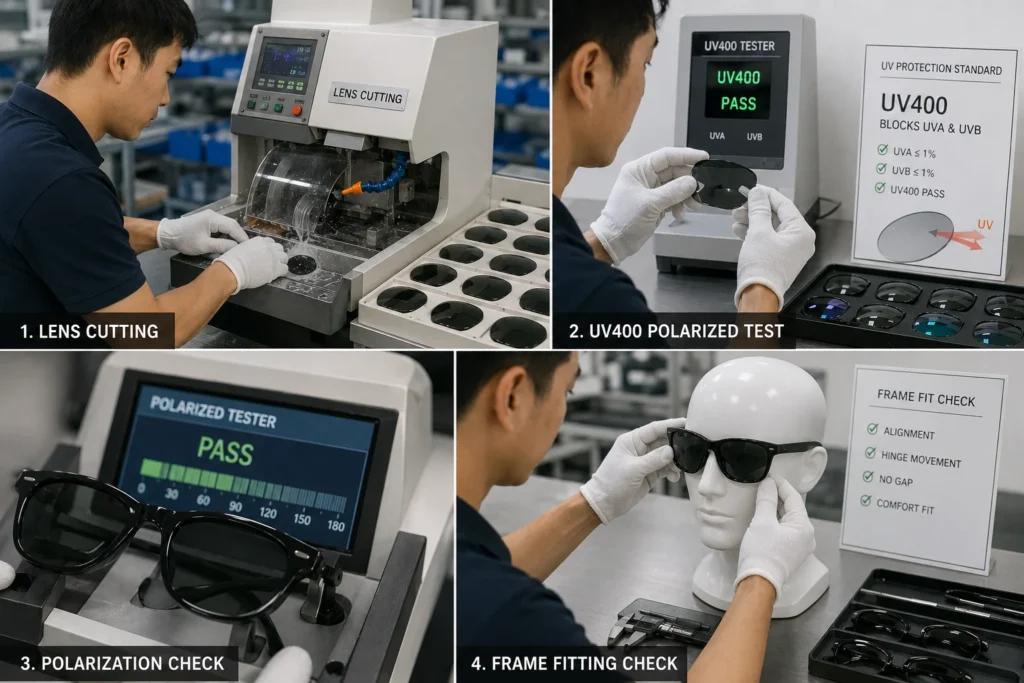
The customer sees the world through the lens, so this part deserves attention.
Assembly Has a Way of Exposing Earlier Mistakes
Assembly looks calm.
That can be misleading.
A lens that refuses to seat properly is usually not an assembly problem. It is an earlier problem finally introducing itself.
Same with crooked hinge behavior.
Same with uneven frame balance.
Assembly teams end up discovering other departments’ mistakes more often than they deserve.
Quality Control Should Be Slightly Annoying
If QC feels effortless, that can be suspicious.
Good inspection catches inconvenient things.
Loose screws. Color drift. Slight lens mismatch. Logo inconsistency. Packing errors.
These are not glamorous discoveries, but they save relationships.
Shipping Can Ruin a Good Job
This lesson tends to arrive the hard way.
One order can be produced beautifully and still become a headache because labels were wrong or cartons were packed carelessly.
Warehouse teams remember those mistakes vividly.
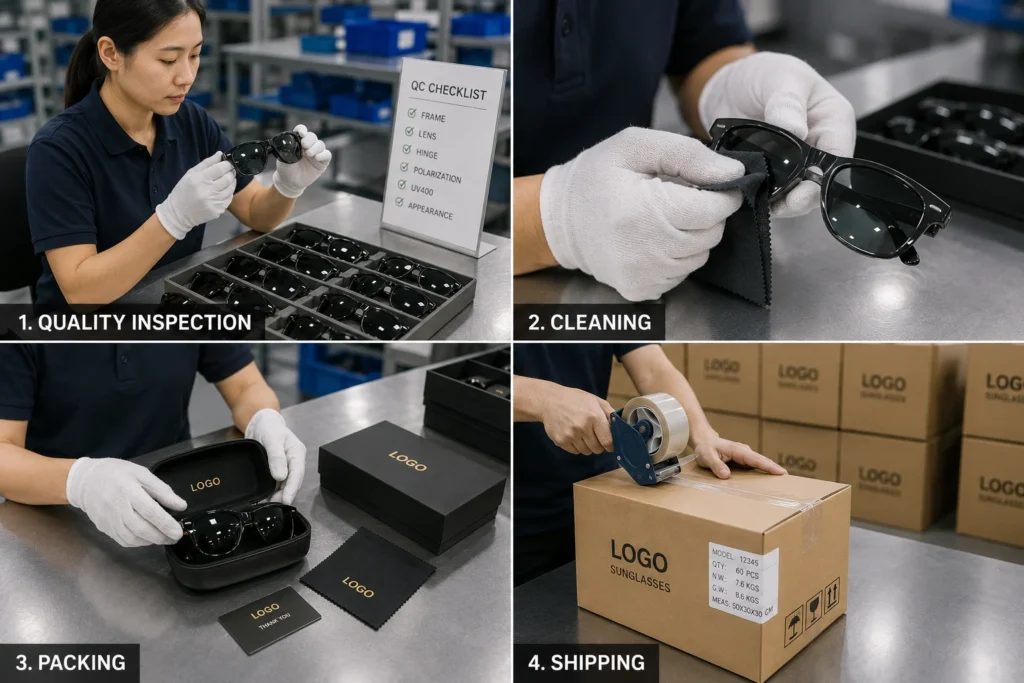
Production quality means less if shipping execution falls apart.
Final Thought
Sunglasses look effortless when someone else has handled all the annoying parts correctly.
That is probably the most honest explanation I can give.
Sunglasses are made through design planning, material preparation, cutting or molding, shaping, finishing, lens fitting, assembly, inspection, and packaging.
The sunglasses manufacturing process includes product development, material selection, production, finishing, lens installation, quality checks, and shipment preparation.
Yes. OEM and private label sunglasses can include custom logos, packaging, lens specs, materials, and design adjustments.
Need Help Choosing the Right Manufacturing Route?
Explore our manufacturing or visit our factory to see how real production works.